Archive for the Uncategorized Category

#106 Vending Machine

Posted in Uncategorized on July 8, 2025 by Dr. David C Lowery

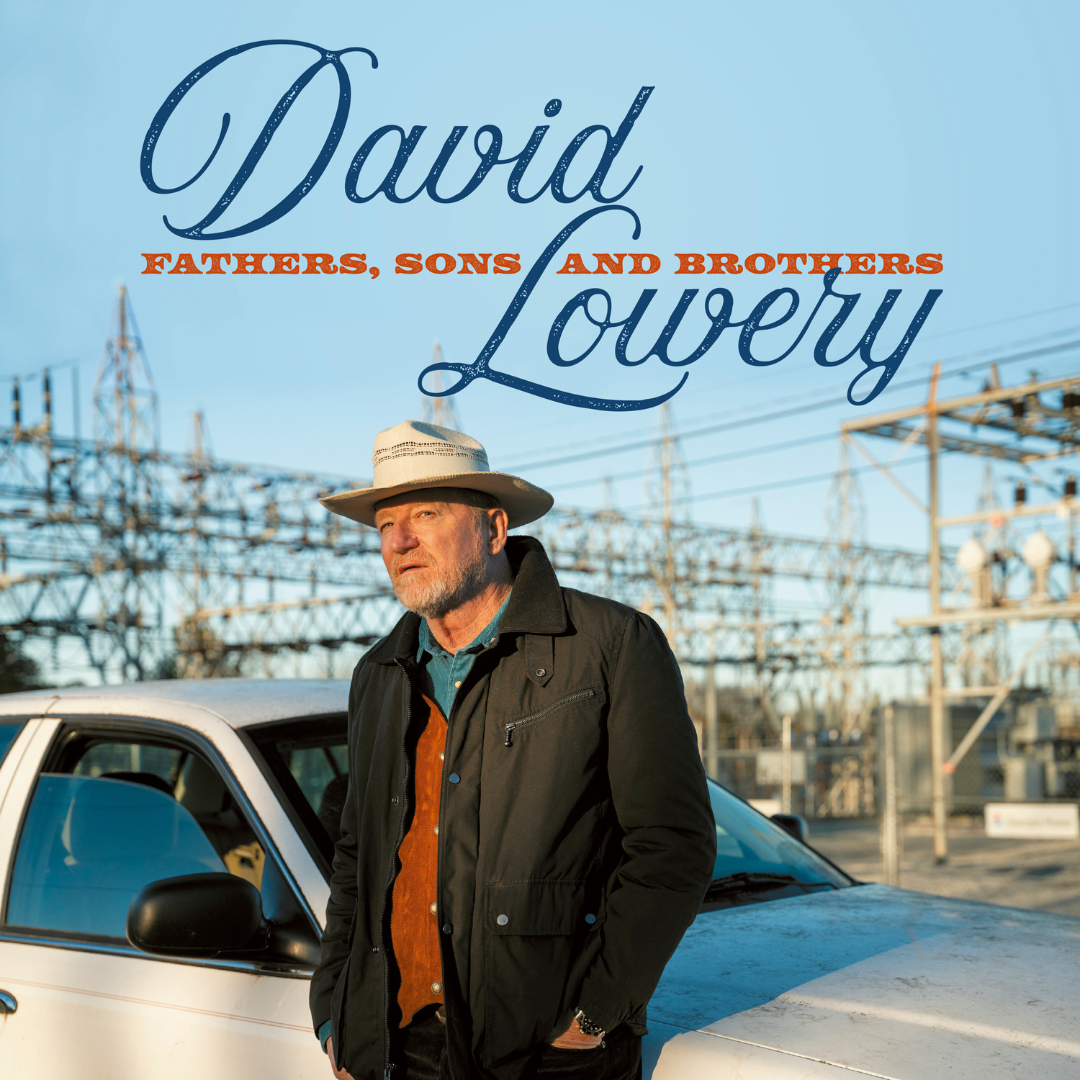
Stream or buy this album here: https://davidl.lnk.to/FSB

In the spring of 2005, the recently reunited Camper Van Beethoven went on tour with Modest Mouse. This was more or less in support of our album “New Roman Times.” We were invited because Isaac Brock, the driving force behind Modest Mouse, was a big fan and supporter of Camper Van Beethoven. Even though we were from different generations, he saw our band as part of the same musical lineage and figured his fans would probably appreciate us, too. At the time, Modest Mouse’s fourth album, “Good News for People Who Love Bad News”—propelled by the single “Float On”—was breaking into the mainstream. While their early fanbase had a lot in common with ours, they were now playing to a much wider audience, and sometimes it wasn’t the best fit for Camper Van Beethoven. Still, we enjoyed the tour and spent a lot of time hanging out with the members of Modest Mouse and their crew. There was plenty of downtime, which sometimes meant some pretty serious drinking and drugs. At the end-of-tour after-party—somehow held in the offices of Spin Magazine in New York—I woke up in the early hours of the morning, sleeping under the publisher’s desk. I’d just been looking for a cool, dark place to sleep off whatever I’d gotten into that night. I woke up when one of the photographers tried to discreetly snap a photo and ended up kicking over a couple of beer bottles on the floor. I was 44 at the time, and it hit me that I had kids who might one day see that photo. I was embarrassed.

On the drive back to Richmond, I decided I needed to clean up and get sober. At the time, I was one of the owners of Sound of Music Studios in Richmond, Virginia. The studio was housed in a four-story, turn-of-the-century building on Broad Street in downtown Richmond. It also served as a rehearsal space and office for the bands. I spent a lot of time in that building. At the back was a kind of atrium, with a wall of enormous sash windows rising nearly thirty feet above the alley. Miguel Rodrigues-Urbiztondo had set up the atrium as a sort of coffeehouse lounge for the studio. It was decorated with cast-off furniture and paintings we’d found in the alley, as that part of Richmond was quickly transforming from run-down offices and apartments to shiny new restaurants and lofts. Miguel had a green thumb and had filled the space with tropical plants and climbing vines in pots. He also had a manual coffee grinder and would buy 50-pound bags of beans to grind himself. The place always smelled of fresh coffee and flowers.

Informally, the atrium had become a clubhouse for much of the Richmond music scene, largely because house engineer and producer John Morand seemed to know everyone in town. John was always welcoming, and there were people hanging out in the lounge day and night, whether they were recording or not.

I spent a lot of time there. Even when I didn’t have work at the studio, I’d often go down to do emails or make phone calls. The atrium looked out onto the back alley, and directly across was a run-down apartment building that was basically a trap house. There were always sketchy people hanging around and drug deals going on. It seemed odd, because just a couple doors down on our side of the alley was a very busy AA/NA meeting place—probably hosting four meetings a day, and on weekends it seemed to run all night. John used to joke that the meeting place was conveniently located next to its supply of substance abusers.

Before and after meetings, many of the attendees would stand out in the alley, smoking, chatting, and catching up. By 2005, the studio had been there for ten years, and I recognized a lot of the regulars. So, after we finished loading Camper Van Beethoven’s gear into the studio basement, I slipped out the back and went looking for that crowd in the alley. As expected, they’d just finished their 5:30–6:30 meeting, and there was quite a crowd. There was one Black man who was always friendly to me, and we’d learned each other’s names. Instead of just nodding hello, I walked up to him and stood there, a bit sheepish, while he joked with his friends. He immediately understood, excused himself, and pulled me down the alley, where we ducked into the mostly empty meeting room.

David Lowery- Fathers Sons and Brothers is a reader-supported publication. To receive new posts and support my work, consider becoming a free or paid subscriber.

“What’s going on?”

“Uh, just curious. How do I get started?”

“Starting what?”

“You know, getting myself sober.”

There was a short pause.

“Well, let’s start with that. *You* are not gonna do anything.”

This confused me.

“You have to surrender.”

I must have still looked confused. He started down the sort of standard AA checklist. “Are you sick and tired of being sick and tired? Have you tried to quit and failed?”

As he was about to move along to explaining what I know now as the second and third steps—the steps that involve God, or to some, ‘a Power greater than ourselves’—he stopped and looked at me as if he were sizing me up.

“Do you believe in God?”

“Uh… Well, I do go to church on occas—”

He cut me off.

“See that vending machine there?”

“Yes.”

“That’s your higher power. Whenever we pray to God, you’re gonna pray to that vending machine. You’re gonna say everything we say, but if you can’t sincerely say you believe in God, that vending machine is your higher power for now.”

This was shocking to me. I started to wonder if I had made a mistake. I think he could tell I was thinking this. He laughed.

“You’re gonna be alright. Meet me here in the morning. 7:00 AM.”

And I did. When I arrived at the meeting that morning, my new—though probably temporary—sponsor pulled me aside before things got started. “When they’re about to begin, go up and unplug the vending machine,” he said. I must have looked confused. “It’s too loud during the meeting.”

When the meeting was about to start, I got up and headed for the vending machine. Another guy got up too, beat me to it, and unplugged it. This became a regular thing—sometimes I’d get there first, sometimes it was someone I’d never seen before. I also noticed a few regulars always plugged it back in after the meeting.

After a few months, it clicked. Some meetings are more secular or non-religious in how they talk about God, but this wasn’t one of those rooms. Most people here were believers, and folks like me—white, and not so sure about the God stuff—were in the minority. I realized the vending machine routine wasn’t just about noise or a workaround for the prayers and steps; it was a quiet signal among the old-timers about who was struggling with the God part.

But from the perspective of many long-time AA members, there’s a deep conviction that it’s the very act of participating in these rituals and routines—whether it’s unplugging the vending machine, reading the steps aloud, or simply showing up week after week—that forms the backbone of staying sober. The repetition and structure of these practices are seen not just as traditions, but as essential tools for recovery, providing a sense of order, accountability, and connection that many believe is crucial to maintaining sobriety. For some, these rituals serve as daily reminders of commitment and community; for others, they become a source of meaning and stability, regardless of personal beliefs about God or spirituality.

From what I understand, this is similar to what some people refer to as orthopraxy in Jewish communities: the idea that one can (and should) continue to perform mitzvot (commandments and rituals) even if belief in God is absent or uncertain. While there is no formal doctrine that religious practice will inevitably lead to belief, Talmudic thought encourages continued observance, suggesting that sincere faith or spiritual connection may often follow from regular practice.

Regardless, practicing the rituals seemed to work for me.

There was, of course, the bizarre side effect that I started noticing every vending machine I came across and sometimes found myself having internal conversations with them. This included the snack vending machine that Greg Lisher (of Camper Van Beethoven) would seek out after shows when we got back to the hotel. Many people who are newly sober develop a sweet tooth, usually in the evenings—probably trying to replace the sugar we used to get from beer or cocktails. I noticed I needed something sweet and salty after shows. Since the early days of Camper Van Beethoven, Greg had a habit of searching out the hotel vending machine for a sweet snack after the gig. For him, it had nothing to do with being sober. After I quit drinking, I started joining him on these late-night vending machine runs.

One night, I think we were in a pretty humble motel in Northern Virginia. The vending machine was in a covered breezeway between two wings of the motel. Greg put his money in for some nuts, and the little spiral arm dutifully dropped the package down to the base of the machine, right behind the plastic door. You were supposed to push the door in and reach for your snack. Just as Greg was about to grab his, some movement inside the machine caught our eye. He instinctively pulled his hand back. From the shadows inside, a rat emerged, scurried forward, grabbed the package of nuts in its mouth, and disappeared back into the machine.

After we got over our shock, we laughed long and hard about it. I skipped my snack that night and headed back to my room. I realized this was what many AA people call a “God shot”—an unexpected and profoundly meaningful event. In that moment, I understood I didn’t need the vending machine anymore. I had a direct connection to God now. I wasn’t faking it anymore.

I passed out underneath of the desk of the

Publisher of Spin Magazine

It was the last night of the Modest Mouse

Camper Van Beethoven tour

I said I didn’t want to live this way anymore

Walked down the alley and I knocked on the door

How do I get started

Fixing myself

He said it don’t work that way

Do you believe in God

I’m really not sure

He said we’ll find a way

We’ll pray to God but your higher power

Will be that flickering

vending machine

We pray to God while your higher power

Is that flickering

Vending machine

I do the work I read the book

I volunteer each week
I focus on keeping clean my side of the street

But not that it matters

But this is a historically black AA room

I am accepted

I’m extended grace

This blows me away

Everyone but me prays to God I got this flickering

Vending machine

Everyone but me prays to God I got this flickering

Vending machine

Everyone I ever met on Madison Street

I got you back ‘cause you had mine

And if you are living well

even if you’re not

I hope that this will find you

And even if you feel irredeemable now

Well you should know that you’re not

Cause one good deed done

Or one moment of grace

Is greater than all the darkness in the world

cause what we don’t know

Is always greater than what we know

Including how this really works

+++++++++++++++++++++++++++++

David Lowery: vocals, guitars, bass guitar
105 Sunrise in the Land of Milk and Honey

Posted in Uncategorized on July 6, 2025 by Dr. David C Lowery

YouTube Video https://youtu.be/fZ0ZvFfaEWI?si=j1I0c4gsB8VGx5Hk

Stream or buy this album here: https://davidl.lnk.to/FSB

This song has an interesting pedigree. Although it was written long before I started this project, it seemed to fill a gap in the story. And like all fiction it was somewhat autobiographical. The song first appeared on a Cracker album of the same name, though in a very different form. The Cracker version is much more upbeat and, for lack of a better word, more alternative rock. The Cracker version evolved over a number of years from separate musical ideas. The introduction was a riff and chord progression that Johnny and I were jamming on during a soundcheck in Köln, Germany. I happened to record it on my laptop. I know this because it was labeled as “Riff Koln Germany” in my music library. Separately, I had another piece of music that became the verse and chorus—moodier, downtempo, and self-reflective. I was riffing on the line “Sunrise in the Land of Milk and Honey,” not sure why. The land of milk and honey, of course, is a reference to several Old Testament verses:

Exodus 3:8: “So I have come down to deliver them from the power of the Egyptians, and to bring them up from that land to a good and spacious land, to a land flowing with milk and honey…”

David Lowery- Fathers Sons and Brothers is a reader-supported publication. To receive new posts and support my work, consider becoming a free or paid subscriber.

Numbers: “If the LORD delights in us, then He will bring us into this land and give it to us, ‘a land which flows with milk and honey.’”

Deuteronomy 26:9: “And he brought us into this place and gave us this land, a land flowing with milk and honey.”

At that point in my life, I did have many things to be thankful for—a wife, two young boys. In the material realm, I had a house, a studio complex, and money in the bank. Even though the music business was becoming much more difficult—the digital age was upon us, sales were falling across the board, royalties were dropping—it wasn’t as if Mary, the kids, and I were wanting for anything. I lived in The Land of Milk and Honey. But I was working hard, doing long tours or spending long hours at the studio to make ends meet. That had begun to wear on me.

Something was missing. I couldn’t put my finger on it. So in the song, I have the female character say:

Sunrise in the Land of Milk and Honey

she says, my little bunny,

is this all that there is?

But it’s really me asking this question. There was something about the constant focus on myself that was part of the job—listening to my voice over and over as I edited vocals, selecting promo photos, deciding which image best matched how I wanted the public to perceive me. I’d hear people say they needed more “me time” and think, “I need a lot less me time.” There was also the constant traveling, and each night you’d make quick, temporary friendships with the local crew or promoter, go out for a beer afterwards, and then the next day move on to a different set of people. I was discussing this one day with a fellow musician, and he said, “Yeah, it’s probably turning us into sociopaths.” That might be a little harsh, but it definitely forces you into a kind of narcissism—and that is never good.

That’s some of what this song is about. It also echoes a phrase often used in AA meetings: “Dying is easy, it’s living that’s hard.” This is also borrowed from a John Totaro song—a Boston/Charleston artist I was producing a record for around this time and for this I’m forever indebted. So there is an obvious conflict here: I’m surrounded by love, abundance, and good fortune, but still, somehow, living is a struggle. Why?

There is some real darkness in this song—or perhaps not in the song itself, but in the background against which it was written. There was a horrible murder in Richmond on New Year’s Day 2006 that devastated many of us in the music scene. I wouldn’t google the details. My neighbor, friend, and fellow musician Bryan Harvey, his wife, and their two young girls were murdered in a senseless home invasion. That’s not strong enough—an incarnation of pure evil, like something from a Cormac McCarthy novel. Even to this day, it’s difficult to type this and acknowledge the tragedy. It changed me, Mary, and many of our friends.

It led me to read the book When Bad Things Happen to Good People. This book by Rabbi Harold Kushner explores why suffering and tragedy occur, especially to those who seem undeserving. Kushner argues that God is benevolent but does not control every event in the world. He emphasizes that bad things can happen to anyone, regardless of their goodness, and that the universe contains both order and randomness. Yet God is present with us in our suffering and is the source of resilience and comfort.

So when I hear this song, the story and words are sung with this tragedy as a backdrop. It’s not about the murders, but it’s there.

Years after recording this with Cracker, I began to play the song solo, or sometimes with Hickman—much slower, much moodier, and darker, because you can’t make this song too dark. Eventually, I recorded this track with Mark Gilley and Bryan Howard on horns, and Luke Moller again adding a wonderful string arrangement. It feels closer to what I originally intended.

Sunrise in the land of the pharaohs 
I see my broken arrows
Scattered ‘cross the plain

Sunrise on the river in the city 
I’m feeling pretty shitty
In the wreckage of my life 

So if you wanna live
Let’s live together
In boas and feathers
In Weimar decadence

And if you wanna die
We can take the low road
‘Cause dying is easy
It’s living that’s hard

Sunrise in the land of milk and honey
She says “my little bunny
Is this all that there is?”

Sunrise in the land of southern idols
Lines on hotel bibles
With fallen debutantes

So If you wanna see
What’s in the shadows
The burning meadows
In our apocalypse

I dream of fallow fields
I dream of winter
‘Cause dying is easy
It’s living that’s hard

+++++++++++++++++

Mark Gilley: saxophones, horn arrangements

Bryan Howard: bass and saxophones

David Lowery: vocals and guitars

Luke Moller: all strings and arrangement

Velena Vego: tambourine and claps

#104 Mark Loved Dogs and Babies

Posted in Uncategorized on July 3, 2025 by Dr. David C Lowery

By Osmund Geier – Own work, CC BY 3.0, https://commons.wikimedia.org/w/index.php?curid=8421064

David Lowery- Fathers Sons and Brothers is a reader-supported publication. To receive new posts and support my work, consider becoming a free or paid subscriber.

Stream or order this album here.

Throughout my life, I’ve had many dogs and many cats. They have richly rewarded me. I couldn’t tell my story without at least mentioning some of the key animals in my life. When I started dating Mary, I found a kindred spirit in my love for animals. But Mary was even more devoted—she had a special calling to rescue the stray, the unloved, and the hard-luck cases. Three dogs were especially important in the early years in Richmond.

Mary had found some kind of greyhound mix, nearly completely hairless from malnutrition and mange, wandering through traffic in the Carytown neighborhood of Richmond. She named her Daisy, and she was actually a fine-looking dog once her hair grew back. People constantly asked what breed Daisy was, thinking she was some kind of purebred hound or working dog. Normally, she was well-behaved, but she never completely lost her street-dog ways, and we had to constantly be on guard with our food. If she thought she could get away with it—and the reward was great enough—all training was overridden. One time, I found her on the kitchen counter, delicately removing sausages I was cooking in an iron skillet. She also developed a habit of running to the door and barking as if someone had knocked. I fell for it once and returned to find my plate of Greek spaghetti missing. Daisy was nowhere to be found.

Jed was a black lab-chow mix, or something like that—a fairly large dog. Mary first noticed him and his sister when they were maybe four months old. They were living in the woods behind a 7-11 on Doswell Rd, just off Interstate 95. Clearly, someone had dumped them there. The two of them had figured out how to beg for food from the customers at the 7-11, but they had gone almost completely feral at this point, and Mary couldn’t catch them. Eventually, someone managed to catch the sister and take her home, but this left poor Jed in the woods alone.

One day, Mary noticed that Jed was not there. She asked the manager at the 7-11, and he said that the game warden had taken Jed a few days ago. When Mary called the game warden, she learned Jed was scheduled for euthanasia. Mary said she wanted to take him home. The warden was skeptical. He thought that Jed, now about six or eight months old, was going to be difficult to domesticate again. Jed would snap at anyone who tried to approach him in the kennel. Eventually, the warden relented. He caught Jed with a loop and pole and put him in the truck. He drove him to our property.

We were now living in the country, and I had fenced about an acre and a half of the property around the house. The warden just drove into the middle of the property, and we coaxed Jed out. He bolted toward the shed/recording studio and managed to get underneath it. Eventually, he made himself a little den under there. We took food to him and gave him water. After a few days of this, we introduced our other dogs to him. That is always a scary moment, as they were both much smaller than he was. Fortunately, he was very friendly toward other dogs, and when our littlest, Lucy, invited him to play, he joined in. Soon, he was out patrolling the property as part of our little misfit dog pack. But he remained half-wild; you couldn’t approach him and pet him.

Our old country vet suggested we just buy a block of cheese and try to feed him little treats by hand. Why cheese? The vet sort of shrugged and said, “Dogs love cheese.” This worked rather quickly, and suddenly we were able to pet him (briefly) or give him a scratch under his collar. But he would be almost a year old before he would come in the house.

It was winter. He’d finally started sleeping in the doghouse we had on the porch next to the front door. I had a heating pad in the doghouse. Finally, one night we had one of those polar vortex events, and the temperature was forecast to go down to minus five. I’d been trying to get him to come in the house almost every night for a while. We had this giant wood stove in the foyer of the old farmhouse. It would heat the entire house. He’d taken to standing in the door if it was open and bathing in the heat from the stove, but he wouldn’t come in. But this night, we opened the door, Mary talked to him a little bit, and he walked in on his own accord. There were four or five cats sprawled on the floor around the wood stove. A couple of them darted off, but others barely moved, and he joined them on the floor next to the stove.

Eventually, Jed became the most normal and well-behaved of all the dogs: good on a leash, good with other dogs, friendly to people. With one curious exception—he didn’t like Johnny Hickman. We have no idea why, but if I didn’t keep him under voice command, he would circle behind Hickman and nip at his rear. He made pretty good contact once. Hickman stopped visiting us after that.

Mary found Lucy in an alley in the Church Hill neighborhood of Richmond. She heard an animal clearly in distress and went running. The dog had apparently fallen off the second-floor balcony of a house—at least, that’s what her owner told Mary. But that didn’t seem right. It wasn’t that high, and Lucy clearly had a severely broken right rear leg. It seemed more like abuse. Mary just scooped Lucy up, and we took her to the vet. She didn’t ask permission. Lucy required some pretty major surgery, and in the end, they basically fused a joint so that she always walked with a limp, or when running, swung that leg out in circles.

She was the smallest of the dogs and quickly established herself as the alpha. In my pickup truck, there was a specific order: she had to sit in the middle next to me, Mary got the window, or if Mary wasn’t there, Daisy was next to her and Jed was at the window. She would snap at the other dogs until they were in the proper order.

We always had to warn people not to pet Lucy because we never knew when she might bite someone. She was mostly fine with people petting her, but when she was done, she’d just bite you to make you stop.

The one exception was Mark Linkous, the singer of Sparklehorse. As mentioned previously, Mark and his brother were the first people I met in Richmond. Mark and I became very close, and he would stay with us all the time. Lucy loved Mark. She never bit him. Mark grew really fond of Lucy and would just come by the house sometimes and pick Lucy up while he drove around and did errands.

There are a few songs that Mark wrote that seem as if he’s referencing a pretty girl, but he’s actually talking about Lucy. “Happy Place” is entirely about Lucy, specifically her habit of controlling the dog food dish despite being significantly smaller than his dogs. She would take a mouthful of her food away from the dish and eat it in her “happy place” when she judged it was time to let the other dogs eat.

Mark loved dogs. And babies. When my oldest son was born, he was the first one at the hospital to visit.

He also gave my son his middle name, or at least lobbied hard for it (it’s a Cormac McCarthy reference; he was a big fan). Mark called from the front desk to my wife’s room, and the nurse picked up the phone and said, “Is <redacted> here?” She was very confused—Why was the baby getting a phone call? It’s an unusual name, Perhaps its a family name? is there a <redacted> Sr?

The sad thing about this is that Mark and his wife were not able to have children. I joked in a previous song about the old trope, “A baby will fix everything,” but in this case, I don’t know—maybe it would have. The science is mixed on generic self-reported happiness levels for parents, but there is evidence that fathers who are not estranged from their children are less likely to fall into “hopelessness” and die deaths of despair. Knowing Mark for a very long time, my hunch is he might not have taken his life if he had the sense of purpose and responsibility that comes along with fatherhood. There is certainly research that shows that fatherhood has the greatest effect on reducing deaths of despair among middle-aged rural white males—a demographic to which Mark belonged. Unfortunately we will never know.

Mary found Jed behind the 7-11 out on Doswell road

It took a while to tame him but then it took

It was minus 5 one winter night

The wood stove blazing hot

He came into the house all on his own

Jed never liked the guitar player

He was always trying to bite his ass

Other wise that dog loved everyone

Lucy had a broken leg

From a fall off a balcony

That’s what her owner said we didn’t believe

Took little Lucy got a pin put in her leg

And no, we never took her back

I guess we are dog nappers

Lucy bit everybody except for Mark Linkous

He would pick her up for rides in his car

He even wrote two songs about her

And everyone just assumed

They were love songs about a beautiful girl

Mark loved dogs and babies he came to visit my day-old son

He took a big sniff of his head and said “I love that smell”

Mark loved dogs and babies and may have a happier life

If he and his wife could have had little babies of their own

Or maybe not

++++++++++++++++++++++++

David Lowery: vocals, guitar and bass
Luke Moller: fiddles
Velena Vego: tambourine

David Lowery- Fathers Sons and Brothers is a reader-supported publication. To receive new posts and support my work, consider becoming a free or paid subscriber.

#103 Fat Little Babies

Posted in Uncategorized on July 1, 2025 by Dr. David C Lowery

Stream or order this album here.

Musically, this tune is a playful riff on that “border ska” faux norteño vibe Camper Van Beethoven used to mess around with. Honestly, most of the creative juice here went straight into the music. It’s mainly me and Luke Moller trading licks, riffing on all those classic Northern Mexican sounds. For an Australian fiddler, Luke absolutely nails it. It’s uncanny—like he spent his youth cruising around Southern California, soaking up all those “Mexican Regional” radio stations. The only thing we’re missing is a herd of tuba and trumpet players to really bring that wild, brassy energy to the party.

David Lowery- Fathers Sons and Brothers is a reader-supported publication. To receive new posts and support my work, consider becoming a free or paid subscriber.

Lyrically—if I’m being straight with you—there’s not a whole lot going on. Apparently, I come off as firmly pro-natalist, which is a strange thing to have to declare these days. What a bizarre world, where there’s a whole pseudo-intellectual crowd arguing we should stop having kids so we don’t upset the forest sprites. At least, that’s the vibe in certain circles in The West. But honestly, sometimes I think it’s just a handy excuse for folks who don’t want to let go of the single-adult lifestyle. Back in my twenties, I was pitching the idea to my girlfriend that we should just fill up a station wagon with babies and figure it out as we went—while secretly dreading the loss of late-night hangs, good food, and music with friends. So on some level I get it.

And there’s some truth there. Sure, you can try to have it both ways, but then you end up with “Fat little babies, wake you with a hangover.” That’s not just a lyric—that’s exactly what happened when my boys were small.

I’m also poking at that old trope—“a baby will fix everything.” It used to be grandmotherly wisdom; then it got recycled in rom-coms as a punchline. Now, some academics call it a harmful myth, cruel to people who can’t or don’t want to have kids.

But for me, the idea that babies fix everything wasn’t far off. I was in my late thirties when my first kid arrived, and it really forced me to grow up—made me a kinder, more patient human. Fifteen years in the music business had me turning into a bit of a narcissist. It took a few more years to quit drinking and sort myself out, but the moment our son was born, it was like the world gained a whole new dimension. My sense of purpose changed overnight. Even now, with my sons grown and living their own lives, I’m still amazed at how much they continue to change me.

Of course, becoming a parent doesn’t magically fix everyone—especially in showbiz. I know plenty of artists who are still as selfish and narcissistic as ever, kids or no kids. I remember watching this showbiz couple at a festival, just behaving terribly in front of their twelve-year-old. One of the younger women in our crew was watching too, and she leans over and says, “That kid’s gonna write a hell of a memoir someday—just hope he doesn’t have to become an alcoholic or a junkie first.”

So, I guess the low bar moral of the story is this: try to be the kind of parent your kids can’t make a bestseller out of.

Fat little babies riding on a cosmic chariot

Fat little babies trip the light fantastic

Fat little babies won’t fix everything between you and me

Fat little babies the mystery of the universe

C’mon darling everything will be all right

We should have a station wagon full

Of fat little babies

C’mon darling everything will be all right

We should have a station wagon full

Of fat little babies

Fat little babies wake you with a hangover

Fat little babies eating from the dog food dish

Fat little babies can’t make you like me any less

Fat little babies what’s it gonna hurt?

C’mon darling everything will be all right

We should have a station wagon full

Of fat little babies

+++++++++++++

David Lowery: vocals, guitars and bass

Luke Moller: strings

David Lowery- Fathers Sons and Brothers is a reader-supported publication. To receive new posts and support my work, consider becoming a free or paid subscriber.

#102 It Don’t Last Long

Posted in Uncategorized on June 29, 2025 by Dr. David C Lowery

I came out of oblivion

With two hit MTV songs

So Jackson quit his day job

Process serving Michael Milken

I bought a house out in the country

With my publishing advance

Jeff Ayeroff said

See I knew you’d write a hit by accident

Stream or order this album here
This song covers the 12 years Cracker spent with Virgin Records under a major label deal. It begins by referencing the fact that our first record was immediately played on the radio—in fact, MTV started airing “Teen Angst” a couple of weeks before the album even came out, which is rare for a new band. That kind of thing happens all the time for big acts, but not for newcomers. But let’s back up a minute.

The last you heard from me, I was cutting demos and struggling to get the label to let us into the studio to record our album. Eventually that happened and we managed to record an album in a fairly efficient six weeks. But before that, between submitting our demos and starting the album, there was a lot of time being flat broke—all of us, including our manager, Jackson Haring. When Camper Van Beethoven broke up, Jackson also lost his main source of income and went back to process serving, which he’d done before becoming a rock band manager.

What is a process server? Ever been served court documents, subpoenaed, or issued a summons? If it wasn’t a sheriff, it was probably a private process server—a professional whose main job is delivering legal documents.

Since Jackson had to work, and this was before everyone had a mobile phone, I would sometimes ride along with him to discuss band business. One day, I joined him while he was staking out the back entrance of a Beverly Hills office building. He was trying to serve some poor schmuck who may or may not have been Michael Milken—the man who later became known as the junk bond king—who had so far managed to avoid being served. Jackson suspected the target was using the freight elevator to slip in and out unnoticed. That day, Jackson’s intuition paid off: as the man was boarding the freight elevator, Jackson managed to toss the documents to him.

It was pretty exciting—it felt like a small victory for me as well. That moment seemed to signal good fortune on the horizon. Shortly afterward, we got the go-ahead to record the new album, our choice of engineer/producer Don Smith was approved, and, most importantly, we received the first installment of the recording advance. It wasn’t a lot of money but we were no longer broke.

Recording the album was fairly uneventful—well, except for getting the legendary musicians Jim Keltner and Benmont Tench to play on a couple of tracks. Keltner played on “Mr. Wrong” and “Happy Birthday,” while Tench played on “I See the Light” and “Mr. Wrong.” Those days were pretty amazing, but otherwise, it was standard Hollywood fare—not quite assembly line, but fast. We didn’t have much of a budget. As the Van Halen song says: “Ain’t got no time to mess around.”

The most interesting part of the whole project was mixing the record and finishing overdubs at a studio in Chatsworth, way out in the valley. Chatsworth might not ring any bells for most people, but at the time, it was the Hollywood of the porn industry, sometimes called Porn Valley. The studio was in an industrial park surrounded by cabinet makers, sheet metal fabricators, and plumbing companies, but also video production companies with unusual names like Velvet Vixen Films or Eros Productions (I’m making those up—apologies if they’re real). When the taco truck showed up for lunch, we played a little game to guess which customers were adult film actors. Oddly, the men were easier to spot than the women. We’d test our hunches by sending the assistant engineer or studio gofer to follow them and see which building they returned to.

“Damn, I thought for sure I was right, he really didn’t look like a sheet metal fabricator.”

When the record came out, the label sent us to San Francisco for a radio programmer convention—I think it was called the Gavin Convention. On the first day, we were thrilled to learn that “Teen Angst” had been played for a panel of programmers in a blind test, and several remarked, “I’d put that in heavy rotation right now.” One of those programmers was from MTV. This happened right at the start of the convention, instantly inflating our egos. Therefore we proceeded to make spectacles of ourselves for the rest of the event: our newfound mischievous rock star swagger had us crashing private parties and stage-diving during Spinal Tap’s closing performance for an audience of seated radio programmers.

Just before the convention, an A&R person from Warner-Chappell Music Publishing offered me a songwriter publishing deal. Publishing deals are like record deals, but for songwriters—many performer-songwriters have both. Even though I was the main songwriter, many songs on the first record were co-written, so it felt odd for just me to have the deal. I had them modify it to include Davey Faragher and Hickman. Warner-Chappell was happy to oblige, since it meant they’d have an interest in all the songs on the record not just mine. But on signing day, Hickman was nowhere to be found. He apparently had reservations and felt slighted, maybe because the deal was originally offered only to me—I never really figured it out. We tracked him down at a laundromat in Hollywood, and Davey Faragher convinced him to come to the attorney’s office with us. By the time the Gavin Convention happened, this was all forgotten, and we all had cash in our pockets, which probably only added to our obnoxious over confidence and cockiness.

A few years earlier, I’d had a brief conversation with Jeff Ayeroff, president of Virgin Records America. I wanted to convince him that Camper Van Beethoven was working hard to create songs that would connect with the public. I may or may not have had a working theory—after all, young artists often think they have special insight into consumer tastes and develop elaborate theories about making hit records. He wasn’t exactly annoyed, but he didn’t want to hear my theories; instead, he cut me off with a warm smile and said, “Just write and record a bunch of songs. You’ll accidentally write a hit.” And that’s exactly what happened. “Teen Angst” was written quickly—like “Skinheads,” I bashed it out in an hour. Hickman added his guitar hook when we demoed it. If any song was an accidental hit, this was it.

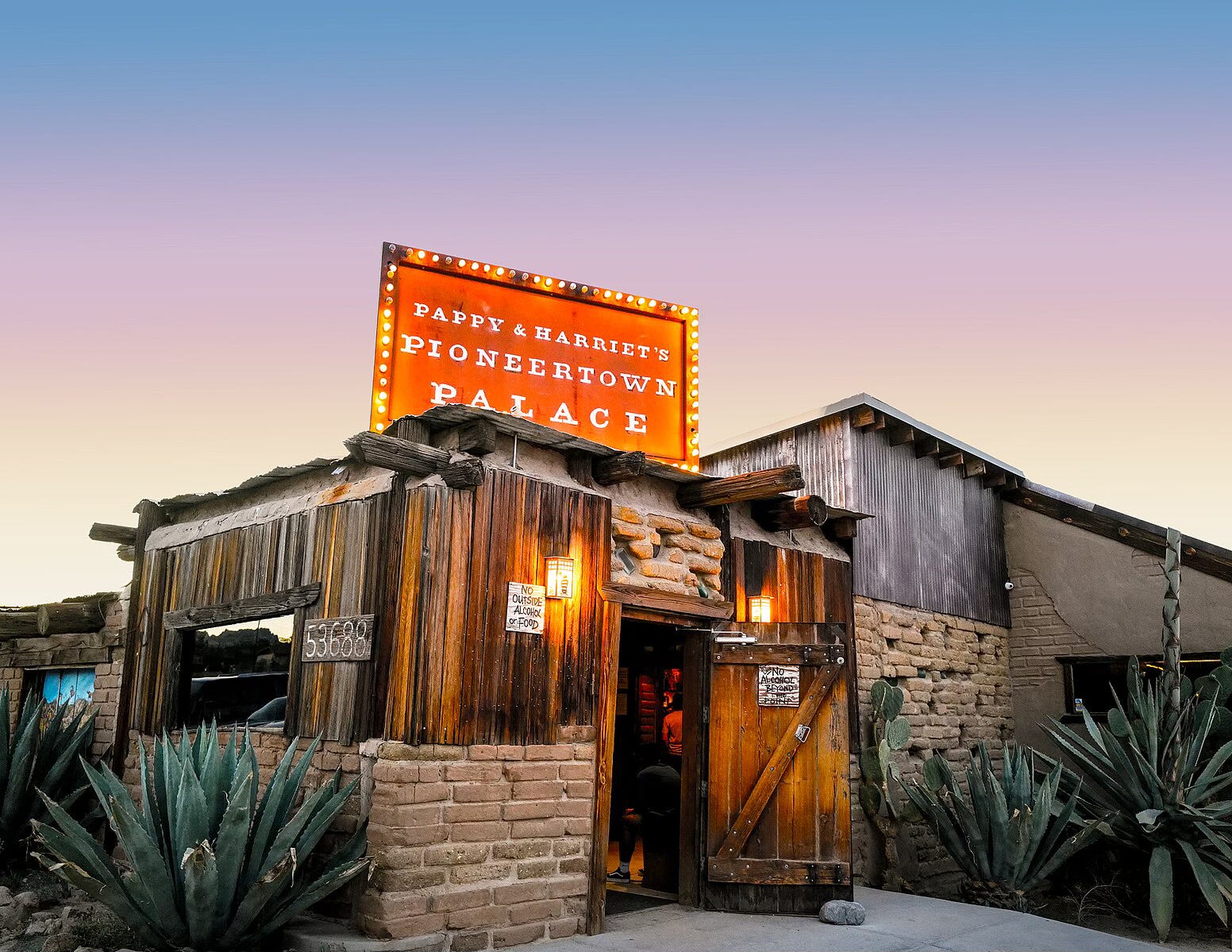
Pappyswiki, CC BY-SA 4.0 <https://creativecommons.org/licenses/by-sa/4.0&gt;, via Wikimedia Commons…

The second album

We recorded it out in Pioneertown

We tried to rent Frank Sinatra’s house

But the realtor shut us down

The album spawned three more singles

None of them sounded like grunge

But we were selling out theaters

It’s timing and it’s luck

The second album was different. We had a bigger budget, and producer Don Smith suggested we do a residency—rent a house in the mountains or a poolside manor in Palm Springs. One day, he picked up me, Johnny, and our manager Jackson in his Chevy Suburban, and we drove around looking at places in the San Bernardino Mountains, Idyllwild, and Palm Springs/Palm Desert. The first place we saw was an old speakeasy in Lake Arrowhead, once operated by gangster Bugsy Siegel—I think it’s called The Tudor House now. There’s an interesting story there but maybe for another time.

Next, we saw Frank Sinatra’s place in Rancho Mirage, a simpler, more rustic spread compared to his famous Palm Springs estate. It had a surprisingly small main house, a pool house/guest house, a movie theater, and remnants of a helicopter pad built for JFK. Sinatra called it The Compound, and ever since, I’ve been searching for a compound for my band. I have this theory that both my bands would have been more popular if we’d had a compound—especially Camper Van Beethoven, which seems like the kind of band that would’ve had one but didn’t. We violated some secret law of the universe, so our career was throttled or shadow-banned by unseen forces. But I digress. When the realtor stepped out briefly, Johnny leapt onto the bed in the master bedroom and said, “Frank and Ava” He was referring to Ava Gardner, but that was actually Sinatra’s Palm Springs house. This was his “breakup” swinging bachelor pad. When the realtor returned, she was now suspicious, she asked what we wanted the house for. When we explained we wanted to record an album, she shut us down and ended the tour.

We looked at a few more places before calling it a day. Jackson suggested we head up to Pioneertown in the high desert for a steak at Pappy and Harriet’s—a legendary roadhouse and live music venue. Though it’s now a fixture on the national touring circuit thanks to Robyn Celia and Linda Krantz, who bought the place in 2003, back in 1993 it was essentially a biker bar known for its serious mesquite grill.

As we ate, Don Smith turned to us and said, “Why don’t we record here? This place has a vibe!” When Harriet walked by, he asked, “Ma’am, is there any way we could record an album here? I’d bring in a mobile truck.” Harriet replied, “You can’t record in here, but what’s wrong with The Sound Stage?” Don surprised “Sound stage?”

Pioneertown, California, was founded in 1946 by a group of Hollywood investors—including Roy Rogers, Gene Autry, and Russell Hayden—as a unique 1880s-themed live-in movie set, designed to serve as both a filming location and a functioning community. Unlike typical Hollywood facades, Pioneertown’s buildings were fully constructed to house real businesses and residences, with Mane Street acting as both the town’s main thoroughfare and a ready-made Western backdrop.

Pappy and Harriet’s had originally been the gas station, but over the years it was expanded and converted into a bar and restaurant. Because this was a functioning movie set, they needed a soundstage for interior shots. They built the soundstage to look like a barn from the outside. We walked down to look at it one late November night—no moon, freezing, and very windy in the high desert. It was pitch black, and Pappy carried an old-school lantern to light our way. The place was filled with cars. It looked like a chop shop. Apparently, that’s what Pappy and Harriet thought, too, and they were in the process of evicting the tenants. Don took one look and said, “This is it. We record here.”

Don loved to conjure up a studio environment that sparked creativity. Producers often ship a lot of their own equipment to a recording location, and Don did the same—but he also sent along a couple of extra crates labeled “vibe.” Inside those crates were tapestries, candles, carved figures, saint candles, ornamental swords, beads, and all kinds of similar treasures. With his collection, he could transform even the most sterile studio into something that looked and felt like an opium den.

But it was more than just show. Don would burn sage and light special candles before we began recording. He was part Filipino and had some Catholic background, which had somehow blended with some Southwestern Native American traditions over the years. For Don, these rituals weren’t just about atmosphere—they were prayers and blessings.

One time, when we were running low on candles, Don sent a studio assistant out for more. The assistant returned with black candles. Don genuinely panicked. He was truly disturbed, believing the black candles could invite negative energy or even evil into the studio—something he associated with black magic or bad luck. “Get those fucking things out of here. Now get ’em out!” he shouted, in a state of real alarm.

But in Pioneertown, there was no need for his crates. The whole place was vibe—weathered wood, rough-hewn beams, railroad ties, and adobe bricks made you feel like you were in an 1880s frontier town. About two months later, we returned with a mobile truck and recorded what would be our most popular album in the soundstage. It was a magical environment for making music—coyotes howling at night, a mountain lion spotted walking down Mane Street, and, on moonless nights, the Milky Way more prominent than I’d ever seen.

Some years later Counting Crows were similarly impressed and sang in “Mrs. Potter’s Lullaby”:

We drove out to the desert

Just to lie down beneath this bowl of stars

We stand up in the Palace

Like it’s the last of the great Pioneertown bars

We shout out these songs against the clang of electric guitars

Well, you can see a million miles tonight

But you can’t get very far

There was something audacious about the night sky in Pioneertown. We became small specks in the universe, yet here we were—undaunted—singing our songs with friends around a campfire, just as others have done for thousands of years. Instead of feeling as if our songs—and ourselves—were in danger of disappearing into the void of the infinite universe above us, it felt as though we were being lifted up and carried along in the slipstream of time, alongside millions of other souls. In that moment, we were immortal, and the songs eternal.

And I should have got down upon

My knees and thanked the Lord

Cause it don’t last long

Enjoy it while you can

It don’t last long

It don’t last long

Enjoy it while you can

It don’t last long

+++++++++++++++++++++++++++++++++
David Lowery: vocals, guitars and bass

Jim Dalton: electric guitars

#101 Pretty Girl From Oregon Hill

Posted in Uncategorized on June 26, 2025 by Dr. David C Lowery

Stream or order the new album here.

“Let It Roll Down The Hill” (#15) and “Pretty Girl From Oregon Hill” are companion pieces that introduce the two main characters from my time in Richmond: the city’s Oregon Hill neighborhood and, more importantly, my first wife, Mary. In “Let It Roll Down The Hill,” I sing about meeting Mary after moving to Oregon Hill, but that’s not entirely accurate—she was actually the reason I moved to Virginia in the first place.

I met Mary a year earlier at a party in Oregon Hill, after a 10,000 Maniacs show at The Landmark Theatre (then called The Mosque). Natalie took me to a party in the neighborhood, where I noticed this wild-looking punk rock goth girl—Mary. She had long black ringlets, wore vintage black lace clothing and combat boots, and was totally cute. A biker saying came to mind: I’d gotten a lot of advice about women from the bikers I worked with—most of it not safe for work—but one piece stuck with me: “It’s okay to date foxes, but marry cute.”

Mary lived in one of those funky, crumbling row houses that had lost the homes on either side. Her place was deeper into Oregon Hill, closer to the canal, where many houses were boarded up, abandoned, or already razed. One time, she came home from work to find that the entire entryway—door, frame, and sidelights—had been removed. The landlord had apparently salvaged it from one of the houses down the street that was about to be demolished, but the owner of that building had come and repossessed it. Mary had a cat and a super-energetic mutt named Daisy. She waited tables at a restaurant and drove a beat-up old Honda Civic. Like I said—a punk goth girl from Northern Virginia.

The contradiction was that, despite her rough teenage years and being on her own since she was eighteen, Mary came from a very respectable family—what we might now call part of “the Deep State.” Her mother and stepfather worked for USAID at various embassies around the world. When her stepfather died, it was revealed that he had been a CIA officer. Her father held a high-ranking position at the Office of Management and Budget, working out of the Old Executive Office Building, which is part of the White House complex.

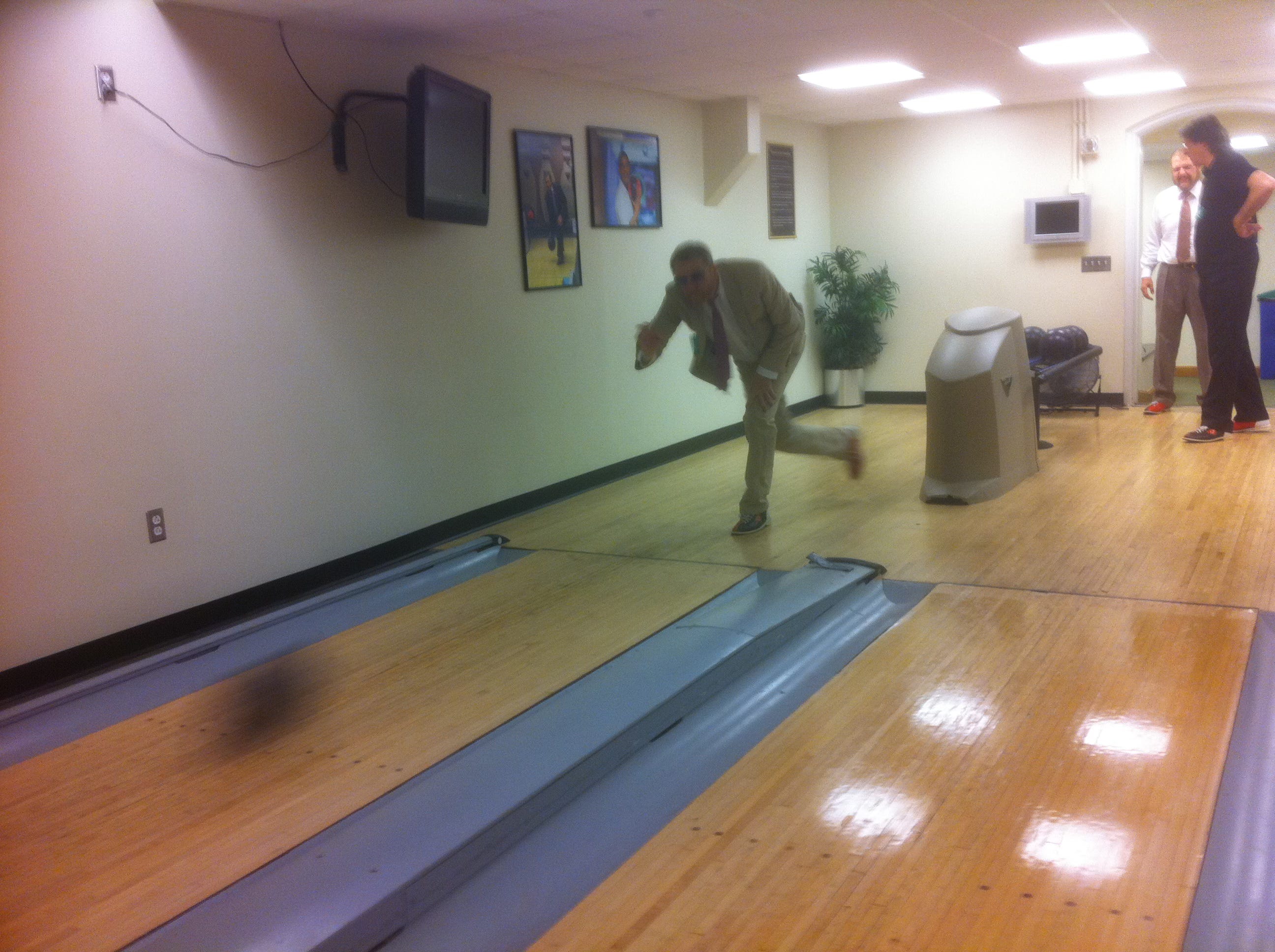
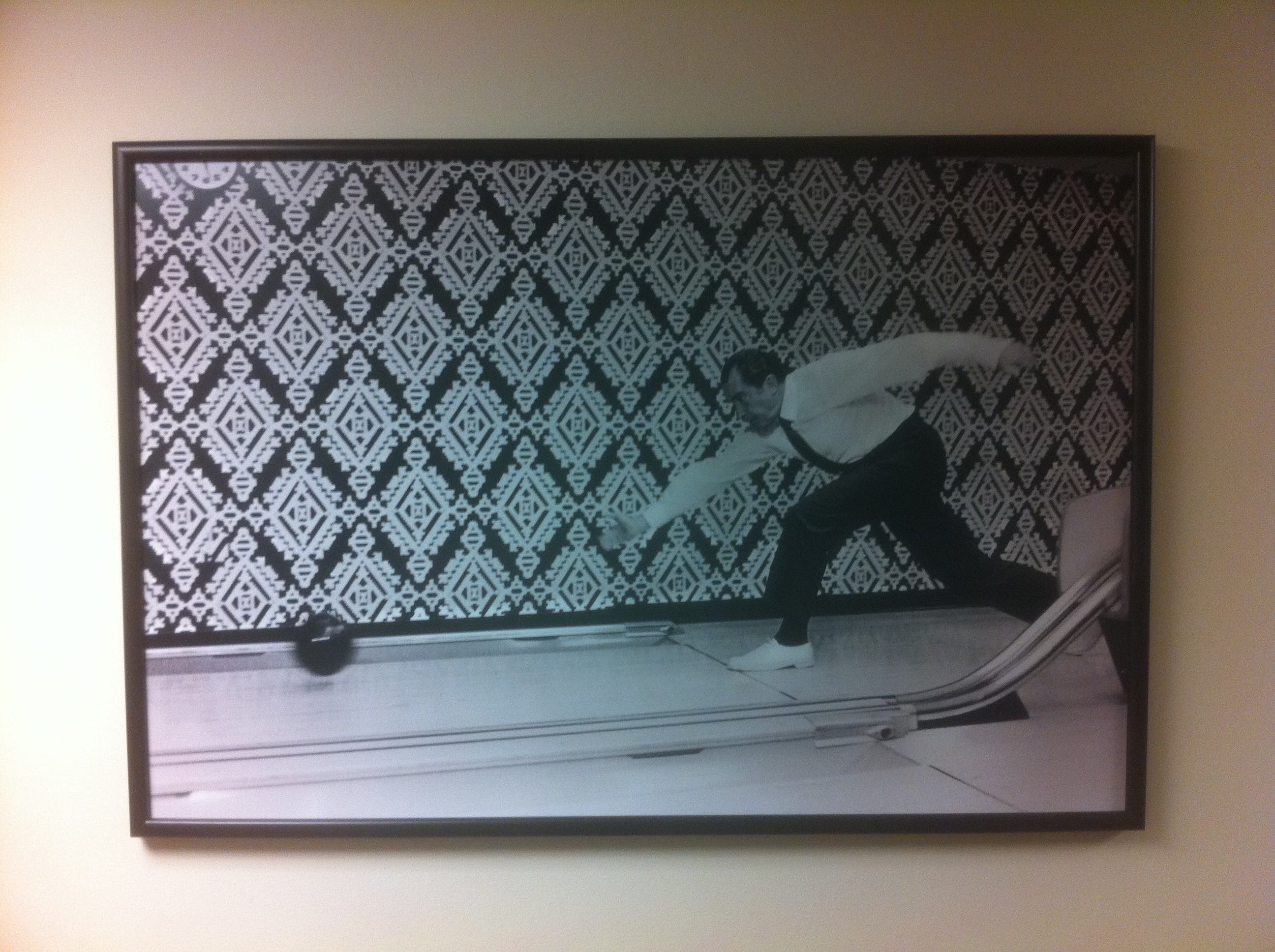
Once, while walking through the building, we saw Vice President Dan Quayle sitting alone in a waiting area, wearing a strangely self-satisfied grin. Mary remarked that he looked like a cat who wasn’t supposed to be sitting on the nice furniture. I didn’t realize it at the time, but that was the first of many visits I would make to the White House and other centers of American power. For example, years later, I bowled at the White House bowling alley—here’s a photo as proof. 

(By the way, here’s a photo of Nixon that is on the opposite wall—notice his toe just over the line. Still, look at his form. To quote Walter Sobchak: “That creep really can roll.”

Back then, Richmond hadn’t yet been discovered and rehabbed by money from Northern Virginia and beyond. Much of the city’s commercial core was empty, boarded up, and abandoned. The 1990s crime wave hit hard, and for a time, Richmond had the highest murder rate in the country. The city was full of deserted buildings. Mary was adventurous—she’d be the first to climb through a window of an abandoned building if it looked interesting. I’d hang back, worried: “You think it’s safe? Are the cops going to come after us?” She’d grow impatient, say “Oh, c’mon,” and disappear inside in a flash of black curls, lace and combat boots. I’d nervously follow. Many of those buildings have since been renovated into upscale homes, galleries, and fine dining restaurants. Ten years later, we’d be invited to grand openings or housewarming parties and tell the new owners we’d been in their building many times before, and liked what they’d done with the place.

The reason I include this song in the set is because I had a really good life with Mary, she’s a great mom and she was incredibly supportive during the early days of Cracker. By Thanksgiving 1990, Johnny Hickman had headed back to California, somewhat discouraged and disillusioned. Though we’d managed to demo twenty songs and submit them to the label, they hadn’t offered to let us start recording, and there was definitely no more money coming in. That’s the thing about record deals: all the optionality is on the label’s side. They could keep us in limbo for quite a while, and that’s exactly what they did. It would be almost a year before we were allowed to start recording. Things got pretty dark for me, but Mary remained positive and supportive. She’d listen to my long ruminations about the best path forward—whether I should give up, get a job, or go back to grad school. Some of these conversations happened late at night after her long shifts at the restaurant. She’d come home with a bottle of wine and tell me to join her in the kitchen while she made pasta at 2:30 in the morning. Her surrogate mom was Stella Stavros, the legendary matriarch of one of the Greek restaurant families in town, and Mary had learned to cook vegetarian versions of amazing Greek and Italian dishes directly from her.

Mary was—and still is—a good friend to animals, always rescuing cats and stray dogs. Some we fostered and adopted out to family and friends; others we kept. At one point, we had seven cats and three dogs, almost all hard-luck cases. Jed had gone almost feral before we found him, Daisy had almost no hair from malnutrition-induced mange, and Lucy had a broken leg. Similarly, I felt like I was a stray she took in. She showed me kindness and encouragement, when others did not. And for this I owe her my life.

Pretty Girl from Oregon Hill 

I told myself that no one has the answers

It was just a way of lying to myself

So when a pretty girl from Oregon Hill

Said come and stay with me well I obliged

We had so many cats it was like a shelter

I brought my things from California

I brought a friend to help me make a record

But he fled back home when the winter it arrived

And the pretty girl

She came from Oregon Hill

She by me and for this

I owe her my life

And the pretty girl

She came from Oregon Hill

She waited tables all through the winter

In wooden house we called big dirty yellow

The only heat it came from kerosene

In the middle of the night

We’d walk down to the old part of town

They called Gunsmoke to buy more kerosene

And the streets they were lined with ancient buildings

Porticos straight from the gilded age

Opulent poverty broken down and half abandoned

You could almost see the ghosts

In the window frames

And the pretty girl

She came from Oregon Hill

We danced in the ruins of

The planter’s mansions

And the pretty girl

She came from Oregon Hill

The boxwoods they shone

Silver in the moonlight

Went to visit your mother in Annapolis

She lived in house that was older than the United States

You father works at The White House now

So baby why you keeping me around

Sweet that you’re down here slumming it with me

Sweet that you’re down here slumming it with me.

+++++++++++++++++++

David Lowery: guitars and vocals

Luke Moller: strings

#100 Let It Roll Down That Hill

Posted in Uncategorized on June 24, 2025 by Dr. David C Lowery
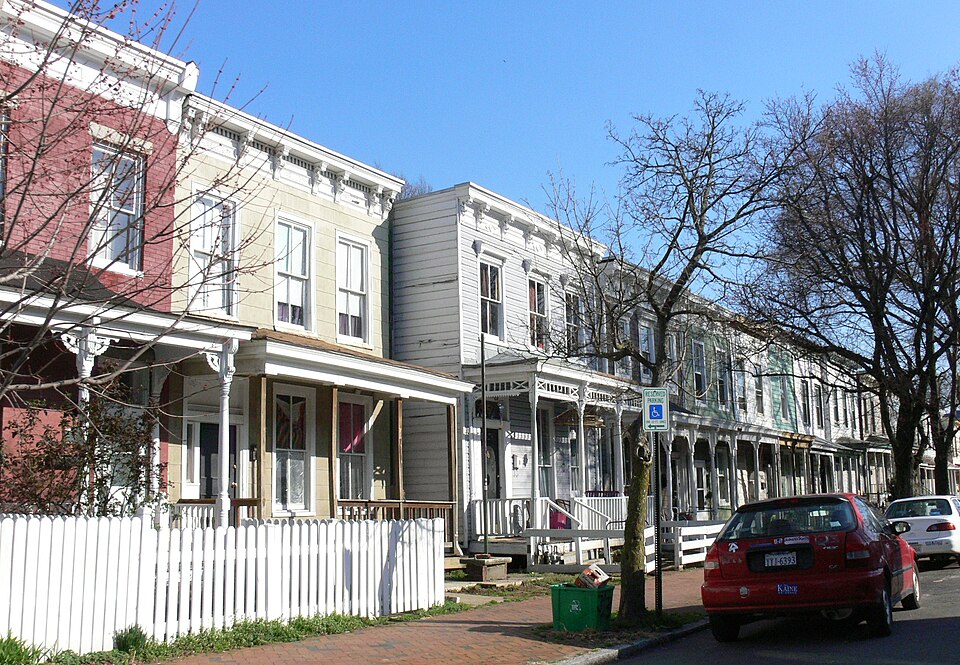
Laurel Street in Oregon Hill. Photo by Morgan Riley CC SA 3.0.

Stream or order the new album here.

If you want to know what “Let It Roll Down That Hill” is really about, you’ve got to start not in Richmond, but at the end of the song Piney Woods. in the middle of a rice field in Arkansas. 

That’s where Johnny Hickman and I found ourselves stranded one muggy night, in my dead ’64 Plymouth Valiant station wagon alongside Interstate 40. The car had thrown a rod, and we were stuck, getting eaten alive by mosquitos while we waited for a tow truck that took its sweet time. Unbeknownst to me, Johnny started swatting mosquitos with a magazine, leaving a Jackson Pollock of blood smears on the headboard. When we finally got to Richmond, I noticed those smudges and must have looked confused. Johnny just shrugged and said, “It’s our blood—from the mosquitos.” I remember thinking, “We’ve already paid a price in blood.” Maybe not the best omen, but maybe not the worst either. If I were a little more goth, I’d probably say something like, “Sometimes you have to bleed for your art.” But I’ll spare you that.


We rolled into Richmond, Virginia, towing the Plymouth behind a rented U-Haul, and landed in Oregon Hill—a neighborhood that, at the time, felt like a city within a city. Our new house at 239 S. Laurel Street was affectionately dubbed “Big Dirty Yellow.” It was big, it was yellow, and, well, it was dirty. Three bedrooms, three hundred bucks a month, no heat, no AC, and a hole in the floor big enough to crawl through into the basement. The houses in Oregon Hill were all like that: narrow, two-story wooden row houses, built for the factory workers at Tredgar Iron Works and the Albemarle Paper Company back after the Civil War. They looked more like something you’d see in New Orleans or a West Virginia coal town than the rest of Richmond.

There’s a persistent legend that Oregon Hill was settled by a whole village of Union loyalists from West Virginia, shipped in to keep the ironworks running and sabotage-free after the war. I’ve never found any hard evidence for that, but it’s believable. The neighborhood had its own accent (river was pronounced plainly as “river,” not the pretentious “Ruhvuh” of the Tidewater elite) its own mountain phrases (“ye oughta”) and a wariness of outsiders that made it feel like a world apart. It was 100% white, working-class, and proud of it—what some folks would call a white-trash ghetto, but with a fierce sense of community.

On the first night in Oregon Hill
Was a hootenanny on the porch
Let it roll, let it roll, let it roll down that hill

Fortunately for us, our neighbors took to us right away, probably because Johnny, always the goodwill ambassador, within  the first our of arriving in Oregon hill  ends up singing an impromptu duet of “Streets of Bakersfield” with the lady next door. When he flipped the last chorus to “Streets of Oregon Hill,” the small crowd went wild and demanded an encore. They had to play it twice more—with the new improved chorus— before the crowd dispersed.

That porch hootenanny was our welcome party, and it set the tone for our time in Oregon Hill. We never had to lock our doors, and no one ever complained about the noise we made recording demos in the house. On one side of us lived a deaf family, except for the oldest daughter who could hear and played pop radio loud. She often went to her grandmothers house for the weekend leaving the radio on full blast. It would play all weekend because the rest of her family couldn’t hear it. One Saturday night about 2:30 in the morning a group of punks probably coming back from a show at the punk club Twisters, stopped outside our house to sing along with the neighbors radio that was blasting that horrible mashup of Baby, I Love Your Way and Freebird that was popular around that time. 

I think I’m making it sound more redneck than it really was. The picture was much more complex. Oregon Hill was starting to change when we moved in. The old-timers—what people called the “Oregon Hillbillies”—were still the backbone, but artists, musicians, and hipsters were moving in, drawn by the cheap rent and the funky houses. Members of GWAR, The Fugs, House of Freaks, Flat Duo Jets, and Cowboy Junkies all lived or hung out there. The nearby Fan District had the money and the history, but not the music scene—too many rules, too many busybodies. Oregon Hill was the wild west, and that’s what made it great. Our house, Big Dirty Yellow, became our studio. We recorded demos there for what would become Cracker’s first albums. There was no insulation, so every sound—inside and out—was part of the recording.

On the second night in Oregon Hill
There was a brawl out in the street
Let it roll, let it roll, let it roll down that hill
People took sides one corner or the other
While the streetlight lit the scene
Big bearded man with a knife and shovel
And the skinny man got a chain

Oregon Hill had its own brand of law and order. The first weekend we had our studio set up, we heard a commotion so loud it cut through our headphones. Two factions—newcomer bikers (not just hipsters were moving in to the neighborhood) and the original Oregon Hillbillies—were facing off in the street. One guy, the big guy, had a knife and shovel, the skinny guy was swinging a heavy chain. Both were shirtless, daring each other to make the first move. “C’mon motherfucker I’m gonna rock and roll you!”A hundred people gathered to watch. The crowd cheered for both sides, which didn’t really make sense, but that was Oregon Hill logic for you. Then a single fat city cop walked in and broke it up. In LA or New York, you’d have had SWAT teams. In Oregon Hill, one cop did the trick.

The Virginia State Penitentiary loomed over the neighborhood—a real prison, with death row and executions. I remember being at a party when the lights dimmed, and someone said, “They’re frying someone tonight.” I think they were joking, but it was never really clear. Anti death penalty protesters would gather outside, and sometimes counter-protesters from the neighborhood would show up with signs like “Fry him.” When they finally tore the prison down, the rats that had lived there moved into Oregon Hill. These were some tough rats—unimpressed by humans, bold as brass. They’d stroll through my kitchen like they owned the place. These were rats that had done time.

On the fifth night in Oregon Hill
I met two brothers both named Fred
Let it roll, let it roll, let it roll down that hill
They lived in an unheated warehouse space
Down in the Shockoe Slip
Played guitar with their band one time
But the rats they ate my cords

It seems like a lot of my Richmond memories from that time involve rats. Around this period, I met the Linkous brothers—Mark and Matt—who would later gain fame as Sparklehorse. Back then, their band was called Salt Chunk Mary. We practiced together in a rat-infested, “unheated warehouse space down in Shockoe Slip.” I was there to play a couple of Camper Van Beethoven songs with them at a local show—my first live performance since Camper Van Beethoven broke up in Sweden.I left my gear there overnight, and when I returned for practice the next day, I discovered several of my cables had been chewed on by rats. These were old-school cables with that fluffy insulation, and it looked like the rats had stripped out the insulation to line their nests. I joke about this now, but that show I did with the Linkous brothers made me feel like I might one day get back on stage and perform my songs again—though, at the time, it wasn’t really clear if that would happen.


Oh and the reference to “two brothers both named Fred.” Is because Mark was born Frederick Mark Linkous. And just to fuck with me he told me that his brother was named Fred as well. Dry Western Virginia mountain humor.

Oregon Hill was full of unforgettable characters. Dirtwoman was a local legend—a redneck drag queen who could have stepped right out of a John Waters movie. Every year, he would wrestle Dave Brockie from GWAR (in costume) for charity. One time, Dirtwoman walked up to my soon-to-be wife, Mary, and took a bite of her ice cream cone. She just handed it over and said, “Keep it—you eat the rest.”

There was also Dog Man, whom Johnny named for his habit of sitting on his broken-down car, drinking beer, and barking or shouting at passersby. His words rarely made sense, but if you were just buzzed enough, you could almost sense a profound truth in his ramblings. There are so many Cracker songs that reference Oregon Hill or things that happened there, it feels like the neighborhood is almost a co-writer. Among the many songs inspired by those days are “Can I Take My Gun Up to Heaven,” “Kerosene Hat,” “James River,” and “Hollywood Cemetery.”

On the sixth night in Oregon Hill
I met my future ex-wife
Let it roll, let it roll, let it roll down that hill

Perhaps I’m burying the lede here: Why did I move to Richmond? I first spent real time in the city on my 29th birthday, September 10, 1989, while on tour with Camper Van Beethoven and 10,000 Maniacs. We played a show at the Mosque Theater near VCU, and afterward, Natalie Merchant invited me to a party in Oregon Hill. That night, surrounded by porch-sitting residents, cicadas buzzing in the trees, and a neighborhood that felt both familiar and strange, I met Mary—my future ex-wife. I’ll tell her story in the next song.

On the first night in Oregon Hill

Was a hootenanny on the porch

Let it roll, let it roll, let it roll down that hill

On the second night in Oregon Hill

There was a brawl out in the street

Let it roll, let it roll, let it roll down that hill

People took sides one corner or the other

While the streetlight lit the scene

Big bearded man with a knife and shovel

And the skinny man got a chain

On the third night in Oregon Hill

Well I finally got some sleep

Let it roll, let it roll, let it roll down that hill

(Hooo Hooo le bon temps roulez etc)

On the fourth night in Oregon Hill

Well I finally wrote a song

Let it roll, let it roll, let it roll down that hill

On the fifth night in Oregon Hill

I met two brothers both named Fred

Let it roll, let it roll, let it roll down that hill

They lived in an unheated warehouse space

Down in the Shockoe Slip

Played guitar with their band one time

But the rats they ate my cords

On the sixth night in Oregon Hill

I met my future ex-wife

Let it roll, let it roll, let it roll down that hill

(Hooo Hooo le bon temps roulez etc)

++++++++++++++++++++++

David Lowery: vocals and guitar

Luke Moller: fiddles

Velena Vego: stomps, claps and backing vocals

#99 Piney Woods

Posted in Uncategorized on June 22, 2025 by Dr. David C Lowery

Stream or order the new album here.

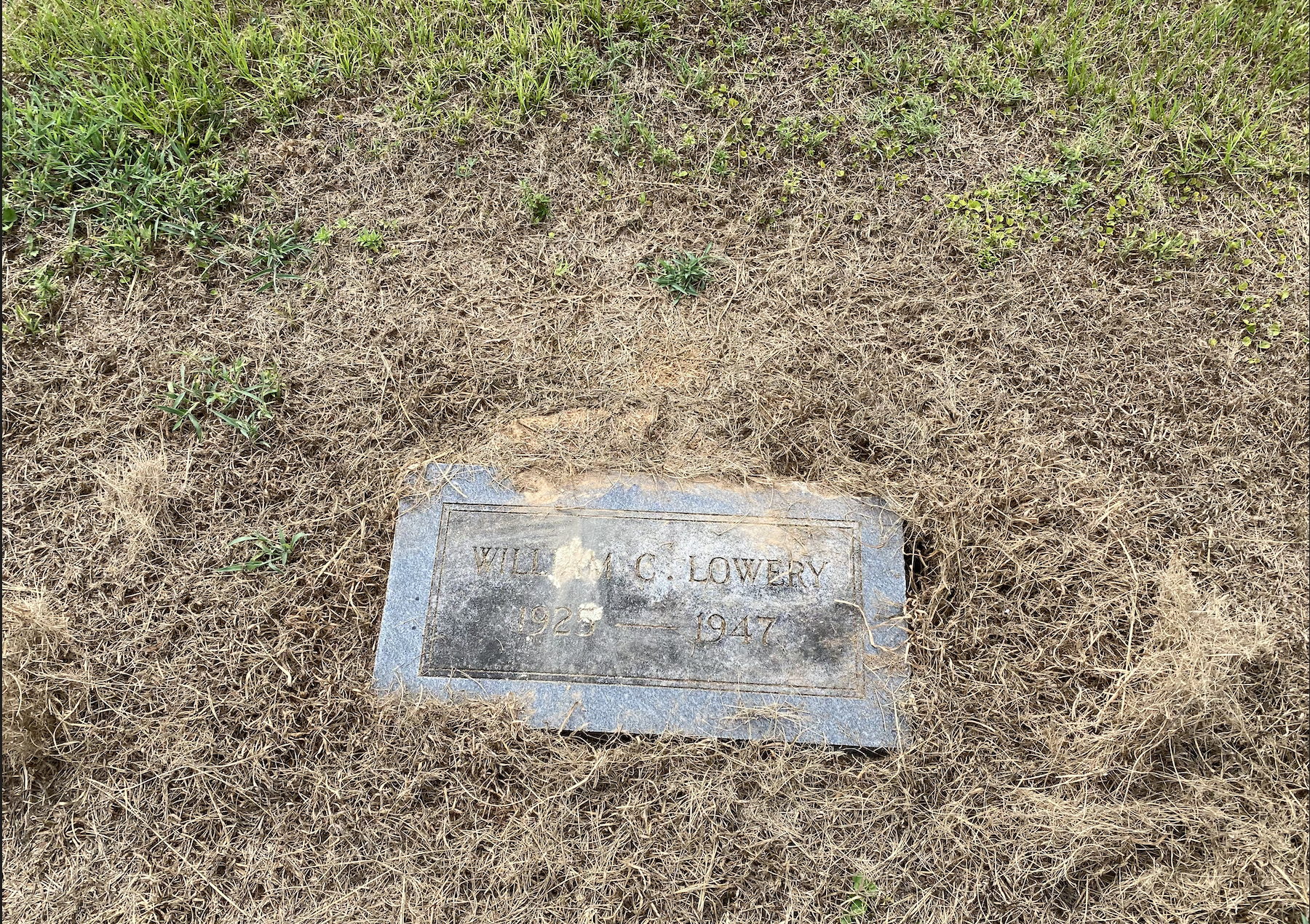
“Piney Woods” ostensibly tells the story of my move from Los Angeles to Virginia, with a stop in Arkansas to visit my grandmother, aunts, uncles, and cousins. But the actual move is the least important part of the story. At its core, this is a song about the murder of my dad’s brother and how that event created generational trauma in my family, with the legacy of racism in Arkansas serving as a kind of coda.

Still, the move itself deserves some mention because it was a complete fiasco. As I’ve noted before, most of my belongings had been stolen while I was in Europe, so I didn’t have much left to take to the East Coast. But even if you don’t have much, uprooting your life and moving 3,000 miles is still a major ordeal. To make things even more complicated, what little I had left was scattered all over Southern California-some with friends, some with family.

I’d convinced John Hickman to come with me. He had a bit of stuff to move as well, but surprisingly not much-just a guitar and a Peavey amp. Even so, it was nearly midnight by the time we finally loaded the last of our things into the U-Haul trailer.

Most sensible people would have waited until morning to leave, but we were about to drive a 26-year-old car across the country. Sure, it had a relatively new engine and a rebuilt transmission, but it was still an old car-and we were towing a trailer. At some point, we realized that since it was August and we’d be crossing the Mojave Desert, it might be smarter to drive at night. That quickly became our plan: cover long stretches after dark. Johnny and I grabbed some coffee-I think at the same Circle K from the “Leaving Key Member Clause”-and headed out of the LA basin into the high desert.

Packed up my Valiant
Station wagon with my clothes
It was almost midnight
When I left Los Angeles
Drove through the desert
On a moonless night
Then I saw the sunrise
The other side of Flagstaff

Drove cross the reservation
With an aching in my heart
Would I see my family
Ever again
Checked into a motel
Gallup, New Mexico
Dreamed about my grandmother
She was speaking to me

The plan was to take a break for a few days in Arkansas, just south of Pine Bluff. My grandmother had recently moved back there with Toni and Wayne, my aunt and uncle. (Incidentally, Aunt Toni’s real name was Marie Antoinette. Unusual, old-fashioned names are a running theme in my dad’s family-don’t even get me started on Sophronia, Nimrod, and General Forest.)

In the late ’80s, much of my dad’s family made a general exodus from the Coachella Valley back to Arkansas. This included Uncle Johnny, the “hellfire Baptist minister,” Aunt Barbara, the infamous felonious twins, and a host of other cousins. Uncle Johnny and Barbara lived about a quarter mile down the dirt road in a ramshackle trailer, while various cousins were scattered deeper into the back country. It was a very humble, very poor area, though not without its own natural beauty. The place sits at the northern end of a region called the Piney Woods.

The Piney Woods is a dense, mostly coniferous forest that stretches across northern Louisiana, southern Arkansas, southeastern Oklahoma, and eastern Texas. Wild, poor, and underdeveloped, it’s home to abundant wildlife and rare species that are nearly extinct elsewhere. Shortly before she died, my grandmother claimed she heard the distinct call of the Ivory-billed Woodpecker-something she remembered from her childhood. I like to think it returned to call her home.

Even today, this area feels more like a frontier than part of a modern, post-industrial nation. While Toni and Wayne worked regular jobs in Pine Bluff for a mill supply company, my Uncle Johnny and his kids lived almost entirely off the land, farming small plots, logging, and fishing.

Come see my grandson
I’m in the piney woods
You’re on your way to Virginia
Come see me son
Come see your family
Your uncles buried in this soil
So you can understand
Where it all comes from

During those few days in Arkansas, I finally had the chance to talk to my grandmother about her life. There was so much family history I wanted to learn before her generation was gone. She was in her eighties at the time. In particular, I was hoping she might tell me about my uncle William C., my dad’s brother, who had died in a small plane crash on their old farm. My dad never wanted to talk about it, and it was clear there was more to the story. And there was.

When I brought up his death, my grandmother seemed almost eager-relieved, even-to finally share the story with me. She started bluntly: “In 1947, my son William was murdered. It was a murder-suicide.” She then described in great detail how the events unfolded. I can’t really do it justice, but essentially, a local pilot owed my grandfather money. It was a bitter dispute. Eventually, the pilot came to my grandfather and said he’d pay what he owed, but wanted William, his oldest son, to accompany him in his small plane to El Dorado, Arkansas-a bawdy former oil boom town to the south. The man promised to bring William and the money back to the farm the next day.

Of course, this was a terrible ruse. The pilot and William C. took off in the plane, circled the farm a few times, then pointed the plane toward the ground at full throttle and crashed it next to the house. My dad and his family watched as William died. This may have even been an attempt to kill the whole family. The reason my grandmother wanted to tell me this story was to explain how the murder created what mental health experts now call generational trauma. This term refers to the psychological and sometimes physiological effects of trauma that are not limited to a single individual but are passed down from one generation to the next.

She and my grandfather were never the same. They eventually sold their property and left that part of Arkansas because of the tragic history and the violence that had occurred there. My grandfather seemed to never sleep. When I was a kid, I remember seeing him sit up all night in a rocking chair at my grandparents’ house in the Coachella Valley. I asked my grandmother if that was because of the murder, and she said, “Likely. He felt responsible.” My father was forever damaged by this as well. He was always beset by anxiety and struggled his whole life, often saying his “nerves were shot” after his brother died. His two older sisters also showed signs of depression and anxiety. I feel like a lot of that anxiety was passed to me from my father, and perhaps from me to my sons.

My wife Velena’s people passed through Arkansas too, though a little farther north, up in the shadowed folds of the Zigzag Mountains. During the lean years of the Depression, her grandfather met his end there-murdered, maybe over a card game, maybe for something even less noble. It makes you wonder about a place, whether the land itself breeds a certain wildness, a lawlessness that seeps into the roots and the rivers. In Arkansas no real city ever really took hold here-unless you count Texarkana, half-in and half-out of everywhere, or nowhere. What you find now are faded boomtowns, hollowed out by time and the slow collapse of oil and timber.

The region is rich in folklore and music about highway robbers, murderers, and all sorts of outlaws. It’s not that there weren’t good people here-there were, and are-but somehow, the darkness always seemed to find its way into every family, touching everyone just enough to leave a mark.

The dark malaise that comes to you
On a bright and sunny day
The feeling that something bad
Could happen any time
It is a family wound
Cuts across three generations son
You carry it inside of you
Just like your father did

My oldest son
Was murdered in these fields
A man came to the house
Owed my husband money
If I can take your son, William
To El Dorado
I’ll bring him back home
With all that I owe
They took off in a small plane
And circled our fields
He pointed the plane downward
it crashed into the ground
As William lay dying
His little brother looked on
That’s what your father carries
It’s inside of you too

And then there is the sordid history of racism in my family, which enters as a coda to the song. What I’m not going to do is what many well-intentioned white people often do when confronting a family history that involves racism or slavery. They tell stories of “the good relative” or create an “ancestral alibi.” These are tales about a great-uncle from Mississippi who defended a black defendant wrongfully accused of a crime, a grandmother in Pennsylvania who stood up to her racist Polish neighbors, a second great-grandmother who was part of the Underground Railroad, or a third great-grandfather who commanded black Union troops in the Civil War. There’s a tendency for white people to share these stories with black friends once they become close. I’ve seen this play out several times in my life, and-as the kids say-it’s a “super cringe” moment. I’m not going to do that—not out of some deliberate effort to avoid it, but simply because, if you go back a couple generations there is little redeemable here. 

Although Arkansas was not a major slave state in terms of sheer numbers, it still has a terrible past with racism. If you mention “Little Rock” to anyone in my generation, the first image that comes to mind is that textbook photo of the 101st Airborne escorting nine black students past an angry white mob into Central High School. In my experience, some of the most virulently racist things I’ve ever heard from white people have been in Arkansas, especially in the mountain regions that never had much of a black population to begin with. As black scholars have noted, this may be due to the dominance of a raw, xenophobic brand of racism in these “whiter” areas, as opposed to the more patronizing racism found in the blacker Mississippi and Arkansas Delta regions.

Someone once confidently told me that only 8% of all American households owned slaves in 1860, implying that it was actually quite rare to be descended from a slaveholder. But that’s a questionable conclusion. You have 32 third great-grandparents. Do the math. If your family is from the South, the odds are inescapable-about 30% of all families owned slaves.

That said, I never once in my life heard my dad, mom, or grandmother use a racial slur or behave in an overtly racist manner. Still, my Arkansas family included plenty of racists-some of whom eventually changed, but many did not. Make no mistake: this is the legacy of slavery. My second great-grandfather owned a couple of slaves. His brother was a large slaveholder, which probably explains why Lowery is a common black surname in the U.S. The Civil War wiped out much of my family; many who survived died of typhoid, and those who lived were left deeply impoverished. They held a grudge about all of this well into my father’s generation. My grandfather’s brother was named General Forest Lowery-after General Nathan Bedford Forrest, the founder of the KKK. No one was hiding anything.

So the confession at the end of the song from my Uncle Johnny is not surprising. He isn’t completely disavowing his racist past; he’s simply admitting that he’s ashamed of having been in the Klan. Like he went too far.

He picked up Hickman and me to go fishing, but first he had a long list of errands to run. Occasionally, he would drop the N-word-old school, hard R. What made it so confusing was that most of his errands involved swapping favors and borrowing things from various black men, who called him by his first name just as he called them by theirs. They were all clearly friends of some sort. The one variation was the black pastor who was recovering from chemotherapy. When we stopped by to see if his lawn needed mowing, Uncle Johnny treated him with respect, addressing him formally and using his honorific and last name. I knew what I was getting into when I agreed to go fishing with him. I went anyway because he always had a certain undeniable charisma despite his flaws. He would have made a good cult leader. How could I turn him down? My first wife, Mary, upon meeting him, said, “Poor Aunt Barbara-her fate was sealed the moment she met him.”

There’s a reason I say, “I can’t escape this country”—meaning the Piney Woods and my family here, despite all their obvious flaws. My father’s family has always been, and still is, deeply religious. Yet many of them are also deeply troubled. Some, like the twins, have had frequent run-ins with the law, struggled with addiction, or been prone to violence.

To most secular or mildly religious people today, much of my family might seem hypocritical, constantly violating the tenets of their Baptist faith. They’d likely be dismissed as “bad Christians”—often by people who misunderstand Christianity. Yes, my family is made up of sinful people, living in a fallen world, just like everyone else. However, unlike the secular, or those who attend church only occasionally, my family has a deep understanding of grace, which is the core principle at the heart of their faith.

The radical nature of grace is that it’s given freely by God—not because we deserve it, but precisely because we don’t. Regular confession, gratitude, and seeking forgiveness are seen not as ways to earn grace, but as appropriate responses to this extraordinary gift. Nowhere else in my life have I found people so willing to acknowledge their wrongdoings, seek forgiveness, and express genuine gratitude for what they have been given. In this regard, I often wish I were more like them.

My aunts husband Johnny
Took us fishing on the Arkansas
He put in the boat
Down under a bridge
And he caught a drum fish
Gave to a young black man
Says “something I’m not proud of
I was in the Ku Klux Klan”
We left that night for Memphis
We drove east in the hot night
Broke down in a rice field
Just off the interstate
Mosquitos they swarmed us
They were eating us alive
I can’t escape this country
I guess it’s my cross to bear

+++++++++++++++++

David Lowery: Vocals and Guitar

#98 Leaving Key Member Clause

Posted in Uncategorized on June 19, 2025 by Dr. David C Lowery

13 Leaving Key Member Clause

The “leaving key member clause,” sometimes called the “leaving member provision,” is a section of a recording contract that addresses what happens if a member of a recording group leaves, is kicked out, or if the band splits up. This provision typically gives the record label several options:

  • Keep the departing member as a solo artist under the same terms as the group contract
  • Retain the remaining members under the same terms
  • Terminate the agreement with either the departing members, the remaining members, or both.

The label can even mix and match these options. The idea is that the record label inserts this clause to protect its investment in the group. If the group breaks up, the label wants maximum flexibility to recoup its losses. The clause becomes controversial when it comes to handling any unrecouped balance. Many people mistakenly think of the unrecouped balance as debt, but it is not. If you end your recording contract with a $1,000,000 unrecouped balance, the record company doesn’t put a lien on your house or car. Instead, it’s an internal accounting system that determines when the record label must pay additional royalties beyond the advances that an artist has already received under the contract.

There is a nuanced debate about whether being “unrecouped” is actually bad. Most managers and artists assume it is, but business managers and musicians with quantitative finance backgrounds-like myself-often argue it’s not always negative. In fact, it can sometimes mean you were paid more than you should have been. Regardless, what is truly problematic is when your new band, retained under the “leaving key member clause,” is forced to carry some or all of the previous band’s unrecouped balance. Unfortunately, this happens-and it happened to me when Camper Van Beethoven broke up. I don’t recall the exact percentage, but it wasn’t the whole balance; it was something around 40% of CVB’s debt. At least it wasn’t 100%, as some contracts require. So, before Cracker received a single advance or recorded a single note, we were already in the hole.

Well I arrived late night in
Southern California
Got a ride from Jackson
To my old place in the Hollywood Hills
“Congratulations you’ve been declared
The band’s key member
Here’s the recording contract
and all of the unrecouped debt”

Ironically, many people saw me as “the lucky one” because I got the recording contract while the rest of the band was dropped. However, this turned out to be good for some of the remaining members: Chris, Greg, and Victor immediately secured a brand new (zero unrecouped balance!) recording contract with IRS Records.

But maybe I was lucky. It would have been a tough sell for me to come up with a 20-song demo and shop it to a bunch of record labels, especially as grunge was about to sweep across the entire rock music landscape. Imagine trying to shop the songs from the first Cracker record in 1991:

“Yeah, here’s the singer from Camper Van Beethoven.”

“Is it grunge?”

“No, it’s sort of country rock.”

“Pass.”

That’s not far from the truth. When I turned in the first Cracker record, our A&R guy basically warned us to lower our expectations, since we were putting out a country-leaning rock record at a time when alternative radio was dominated by Nirvana.

Drove my Valiant out to my Redlands
Storage locker
The door was open
The lock laying on the ground
All my gear was gone
Just a crate of vinyl records
Sold them all for cash
At Rhino Records that afternoon.

After Camper Van Beethoven broke up, I drifted around for a while. As I mentioned earlier, I stayed with my grandfather in the UK, then went to Morocco (see the song “Sidi Ifni”), and later Virginia. Eventually, I returned to California, where my manager, Jackson Haring, and future attorney, Brian McPherson, let me stay in my old apartment while I tried writing songs with a few people, including eventually Johnny Hickman.

When I got to LA, I went out to Redlands, CA. I’d left my car at my parents’ house, and all my belongings were in a mini storage unit. My car-a 1964 Valiant station wagon-was fine, but my storage locker had been mostly cleaned out. Someone had cut the lock, apparently just the night before, and taken almost everything: most of my music gear, recording equipment, and my vast vinyl collection. A few records remained. This was extremely disheartening. I considered giving up right then and there-just getting a regular job. I looked up some old friends in Redlands, and we went out and got drunk that night. I woke up the next morning at my parents’ house, slightly hungover, angry, and determined to double down on my music career.

I took what was left of my vinyl records and sold them at Rhino Records in Claremont, California, netting maybe $300. I had about $2,500 in the bank. I drove to Guitar Center in Hollywood and spent about $2,000 on a Tascam 688 all-in-one 8-track recorder, two Shure dynamic microphones (57 and 58), an Audio-Technica small-diaphragm condenser, and an Alesis HR-16 drum machine. Fortunately, I’d taken my two main guitars to Europe, and I’d left a bass and a few other guitars at my parents’ house, so I didn’t have to buy new instruments. I don’t remember the exact figures, but I do recall having about $800 left to my name, and I was determined to make it last until I could demo a few songs for the label.

Wait a minute-what about that record contract? That’s the thing: you get the advance at the commencement of recording, or at least pre-production. The problem was that I was still under the old contract. Damn leaving key member clause! A new deal would have given me a small signing bonus-some walking-around cash. I knew I could probably talk the label into giving me some money a little early, but I’d need a few song demos first. That was my plan.

So I set up a little studio in my old apartment. Bryan McPherson had taken my room, so Jackson and Bryan let me sleep on the couch, and I started recording in the kitchen during the day while they were at work.

I took that cash and my last
Two thousand dollars
Bought a Tascam 688
And some microphones
Set it all up
In the kitchen of Bryan McPherson’s apartment
The record company contract
Leaving key member clause

I already had a few songs in the works, although none were fully finished. One of them was “St Cajetan,” which started as a riff and chord progression I came up with before a Camper Van Beethoven gig at St Cajetan’s-a Catholic church that sometimes served as a music hall at the University of Colorado Denver. I also had a lyric idea: “All I want is a cool drink of water.” That line was inspired by a conversation I had with one of the clergy there. When I asked what St Cajetan was the patron saint of, he paused and replied in broken English, “Complicated… one thing is the man that tells you where to dig a well.” I thought, “Interesting-a dowser, a well diviner. So, St Cajetan, all I want is a cool drink of water.” As it turns out, that’s not quite accurate; St Cajetan is actually the patron saint of bankers and gamblers. Still, since dowsing has a shady history and is basically a form of gambling, maybe the connection isn’t so far off. But I digress.

So I had this guitar riff, chord progression, and one line of lyrics. Johnny Hickman was an old friend from Redlands-we’d even played in some of the same bands (though not always at the same time). I invited him to Los Angeles to try writing together. We started with St Cajetan. Within an hour, he had added a powerful guitar riff and backing vocal melody, transforming the song into more of a southern rock anthem. We tried another song, then another. In about a week, we had five or six songs. They weren’t perfect, but it was clear we had a knack for writing together.

What I didn’t realize was that Hickman was just as broke as I was. He had borrowed money from his mother just to make the drive from Kern County to the writing sessions. One morning, he showed up at the apartment with a black eye. It turned out he’d given his last $20 to the clerk at the Circle K gas station and put a small amount of gas in his car. The clerk gave him change for a ten. A huge argument ensued, and Hickman got punched. The cops came and it was looking bad for Hickman since he’d come around behind the counter. Eventually, a good Samaritan suggested they count the cash drawer. The clerk had $10 too much and gave Hickman his money back, along with an apology. The funny thing was, after that we went into this Circle K all the time for beer and cigarettes-it became our tradition.

Johnny Hickman comes in
with a black eye just out of Kern County
A Circle K argument
Over incorrect change
Couldn’t make up my mind if this was a good
Or terrible omen
But he took out his frustrations
Playing guitar on every song
I could barely get by on my
Bug mechanical royalties
But the record company parties
Kept us fed and drunk
There were local girl flirtations
In the Hollywood dive bars
The record company contract
Leaving key member clause
It’s a wonder we got anything
Done at all
It’s a wonder we ever left

+++++++++++++++
Bryan Howard: bass

Jeremy Lawton: piano and organ

David Lowery: vocals and guitar

Carlton Owens: drums

Matt “Pistol” Stoessel: pedal steel

#97 Battle of Leros

Posted in Uncategorized on June 17, 2025 by Dr. David C Lowery
Partial record of my Granfathers’s service in the Royal Navy.

Stream or order the new album here.

After Camper Van Beethoven broke up, I found myself in the United Kingdom with a return flight to Washington, D.C. that wasn’t scheduled for another month. I had always intended to visit my grandfather in Westgate-on-Sea—a village adjacent to Margate (see: #1 Frozen Sea)—for a few days, but now I suddenly had several weeks at my disposal. In many ways, this turned out to be the best therapy imaginable.

My grandfather was a relentlessly positive survivor of various Second World War naval campaigns, as well as a seasoned merchant seaman. He had travelled all over the world and, to put it mildly, had seen a great deal. The point of the song is this: here I am, a young man facing a personal crisis—having essentially lost my job and my identity as the singer of a well-known indie band. It felt like the end of the world to me, but in reality, my problems were quite trivial compared to what people two generations before—like my grandfather—had to endure.

It’s remarkable, really, that despite periods when things may seem to worsen for new generations, on the whole and over the long term (at least here in the liberal democracies), one’s grandchildren are generally better off than oneself. As a young man, my troubles were insignificant compared to what my grandfather had faced, which included fighting actual Nazis—an enemy both numerically and technologically superior at times. The wonderful thing about my grandfather, though, was that he never needed to say any of this to me. He didn’t have to point out that I was a “foolish young man with very small problems.” He was genuinely pleased that I lived in a safer, freer, and more compassionate society. Indeed, if you’d asked him, that was precisely what his sacrifice was about: so that his grandchildren could have “very small problems.”

And what, exactly, was his sacrifice? What did he endure? Like many of his generation, he rarely spoke about the truly harrowing, gritty, and terrifying aspects of his service. Instead, he would share amusing, family-friendly stories about his adventures in exotic places like Sri Lanka (which he still called Ceylon), Sierra Leone, or even downtown Oakland, California. We grandchildren managed to piece together that at least one of his ships was torpedoed and had to be completely rebuilt at Mare Island, Vallejo, California. After he passed away, my sister Stephanie, my cousin Russell, and I made informal and occasional attempts to piece together his wartime experiences. In recent years, this process has become much easier thanks to the online availability and searchability of military archives, which have allowed us to reconstruct some of his story.

As I mention in the song, his ship, HMS Liverpool, appears to have been severely damaged during the Battle of Calabria. This must have been a terrifying ordeal, as he was an engineer and would have been below decks, striving to keep the ship afloat, effecting repairs, and fighting fires. The records are patchy, so it’s difficult to say whether any lives were lost in these attacks, but it was certainly a significant engagement. The ship was disabled but remained structurally sound enough to be taken in tow towards Alexandria, Egypt. However, en route, she was bombed by an Italian dive-bomber, resulting in a massive explosion that tore the bow completely off, causing extensive damage and loss of life. Remarkably, the ship was temporarily repaired in Alexandria and then towed all the way to Mare Island, California, where my grandfather was part of the crew overseeing her repair and return to service.

I should note that I have mis-titled the song. Since some of the action involving this ship took place in the Eastern Mediterranean off the coast of Leros, I mistakenly believed it was part of the Battle of Leros. In fact, that engagement was a key part of the Dodecanese Campaign and a significant setback for the British and Allies, but it occurred much later in the war. By that time, my grandfather was stationed in Sierra Leone, operating from a former merchant vessel, HMS Philoctetes, which served as a floating repair ship for damaged Royal Navy and merchant vessels. By then, repairing ships had become something of a speciality for my grandfather, given his considerable experience.

Although this was considered a relatively “safe” posting, it was dangerous in a different way. The repair crews worked on two ships moored alongside each other, so there was always the risk of injury from the movement between vessels or the danger of falling overboard into waters with swift currents. The narrowing of the estuary there creates a strong tidal scour, with currents reaching up to six knots. While this preserves a natural deep-water harbor, anyone falling overboard would likely be swept away.

In addition, it appears my grandfather was involved in another historic incident while serving aboard HMS Liverpool. In January 1940, before Japan and the United Kingdom were officially at war, Liverpool caused a diplomatic incident by intercepting the Japanese liner Asama Maru off the coast of Japan and removing 21 German nationals, which prompted a formal protest from the Japanese government.

One final correction the US made minesweeper that my Grandfather served on, that was later in the Cold War not during WWII. So in fact “Mickey Mouse with a big push broom” was not in fact “sweeping up German mines.”

Looking back, I realize that for all the weird and wonderful places I’ve been I was never really caught up in the kind of world-shaking events my grandfather lived through. Sure, I’ve had my share of misadventures and existential crises, but let’s be honest: none of it compares to dodging torpedoes in the Med or patching up warships under enemy fire. My stories are mostly about problems of my own making. Yet, you know my stories—my trials and tribulations—but not his. Perhaps this song can help balance that out a bit. 

Finally hats off to Megan Slankard who does backing vocals on the record. She also did some sort of whistling keyboard part to evoke boatswain’s whistles. 

Knock knock grandad I’m at your door
Wounded pride cause I lost my girl
Lost my friends down on my luck
Can I stay with you

Cause you’re always so sunny grandad
Cause the Jerrys didn’t get you
Leave you sleeping with the fishes
At the bottom of the sea

So sunny grandad
Cause the krauts didn’t get you
Leave you sleeping with the fishes
At the bottom of the sea

You were my age
You’d already been
Stuka bombed and torpedoed twice
The campaign at Dodecanese
Can I stay with you

Cause you’re always so sunny grandad
Didn’t sink you at Leros
Leave you sleeping with the fishes
At the bottom of the sea
You’re so sunny grandad
Cause the Jerrys didn’t get you
Leave you sleeping with the fishes
At the bottom of the sea

And I know
I’m a foolish young man
With very small problems
I know
You would never say that to me
I know
You wouldn’t want me
To have to fight in World War II
To get a better disposition
To keep it all in perspective

Flying high off Sierra Leone
Rum rations with the local host
Lost some mates on that swaying gangplank
Swallowed up by the angry sea

You’re so sunny grandad
Didn’t sink you at Leros
Leave you sleeping with the fishes
At the bottom of the sea

You’re still sunny
Granddad cause the krauts didn’t get you
Leave you sleeping with the fishes
At the bottom of the sea

And I know
I’m a foolish young man
With very small problems
And I know
You would never say that to me
And I know
You wouldn’t want me
To have to go and fight the Nazis
To get a better disposition
To put it all in perspective

And I know
I’m foolish young man
With very small problems
And I know
You’re probably annoyed with me
And I know
You would never want me
To have to go and fight the Nazis
To get a better disposition
To put it all in perspective

Spiced rum with clove liqueur
Looking at your old ship’s plaque
Mickey Mouse with a big push broom
Sweeping up German mines

You’re always so sunny grandad
Didn’t sink you at Leros
Leave you swimming with the fishes
At the bottom of the sea
You’re still sunny
Granddad cause the krauts didn’t get you
Leave you swimming with the fishes
At the bottom of the sea

+++++++++++++++

David Lowery: vocals, bass, guitars and drum machine
Megan Slankard: backing vocals, keys and whistlin’