105 Sunrise in the Land of Milk and Honey
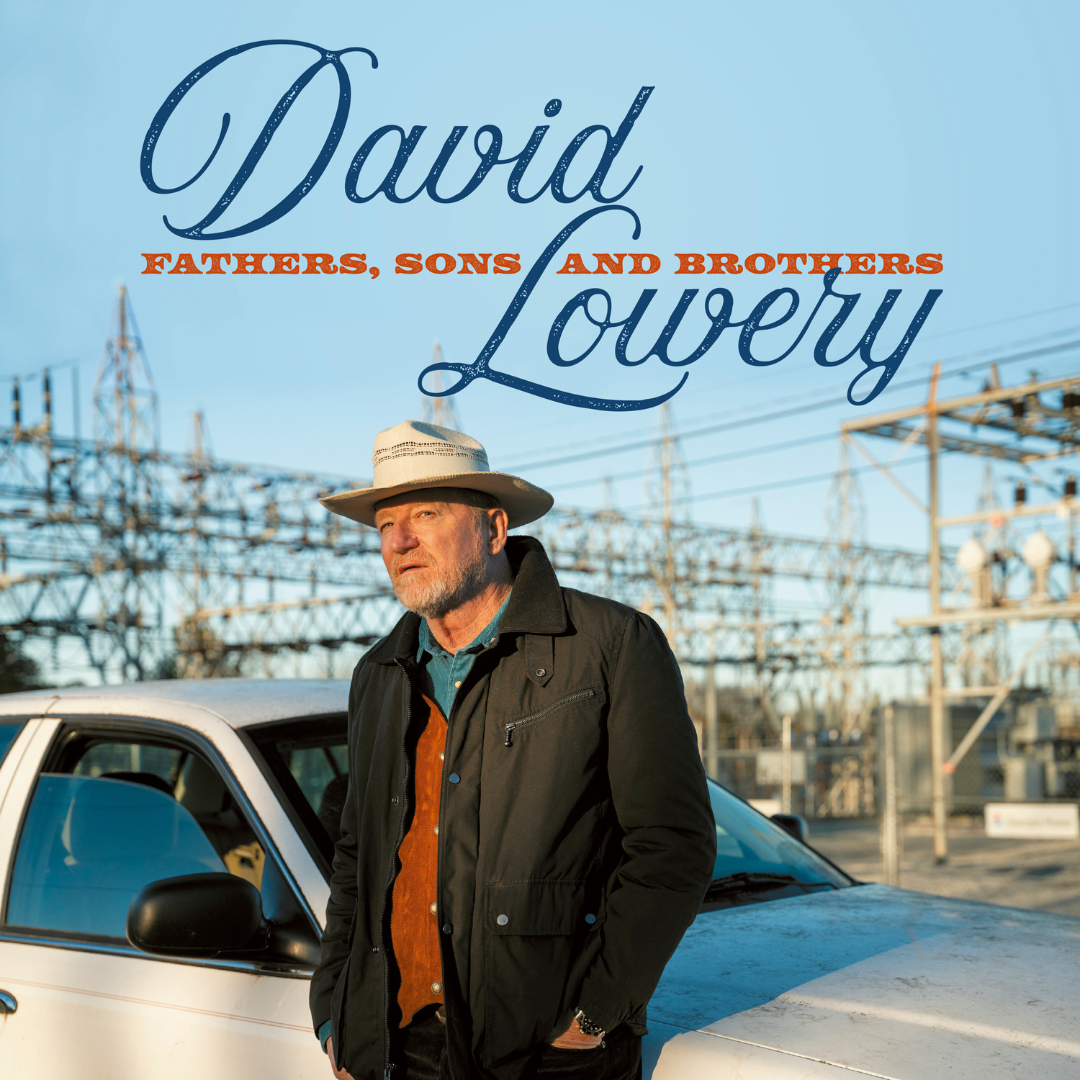
YouTube Video https://youtu.be/fZ0ZvFfaEWI?si=j1I0c4gsB8VGx5Hk
Stream or buy this album here: https://davidl.lnk.to/FSB
This song has an interesting pedigree. Although it was written long before I started this project, it seemed to fill a gap in the story. And like all fiction it was somewhat autobiographical. The song first appeared on a Cracker album of the same name, though in a very different form. The Cracker version is much more upbeat and, for lack of a better word, more alternative rock. The Cracker version evolved over a number of years from separate musical ideas. The introduction was a riff and chord progression that Johnny and I were jamming on during a soundcheck in Köln, Germany. I happened to record it on my laptop. I know this because it was labeled as “Riff Koln Germany” in my music library. Separately, I had another piece of music that became the verse and chorus—moodier, downtempo, and self-reflective. I was riffing on the line “Sunrise in the Land of Milk and Honey,” not sure why. The land of milk and honey, of course, is a reference to several Old Testament verses:
Exodus 3:8: “So I have come down to deliver them from the power of the Egyptians, and to bring them up from that land to a good and spacious land, to a land flowing with milk and honey…”
David Lowery- Fathers Sons and Brothers is a reader-supported publication. To receive new posts and support my work, consider becoming a free or paid subscriber.
Numbers: “If the LORD delights in us, then He will bring us into this land and give it to us, ‘a land which flows with milk and honey.’”
Deuteronomy 26:9: “And he brought us into this place and gave us this land, a land flowing with milk and honey.”
At that point in my life, I did have many things to be thankful for—a wife, two young boys. In the material realm, I had a house, a studio complex, and money in the bank. Even though the music business was becoming much more difficult—the digital age was upon us, sales were falling across the board, royalties were dropping—it wasn’t as if Mary, the kids, and I were wanting for anything. I lived in The Land of Milk and Honey. But I was working hard, doing long tours or spending long hours at the studio to make ends meet. That had begun to wear on me.
Something was missing. I couldn’t put my finger on it. So in the song, I have the female character say:
Sunrise in the Land of Milk and Honey
she says, my little bunny,
is this all that there is?
But it’s really me asking this question. There was something about the constant focus on myself that was part of the job—listening to my voice over and over as I edited vocals, selecting promo photos, deciding which image best matched how I wanted the public to perceive me. I’d hear people say they needed more “me time” and think, “I need a lot less me time.” There was also the constant traveling, and each night you’d make quick, temporary friendships with the local crew or promoter, go out for a beer afterwards, and then the next day move on to a different set of people. I was discussing this one day with a fellow musician, and he said, “Yeah, it’s probably turning us into sociopaths.” That might be a little harsh, but it definitely forces you into a kind of narcissism—and that is never good.
That’s some of what this song is about. It also echoes a phrase often used in AA meetings: “Dying is easy, it’s living that’s hard.” This is also borrowed from a John Totaro song—a Boston/Charleston artist I was producing a record for around this time and for this I’m forever indebted. So there is an obvious conflict here: I’m surrounded by love, abundance, and good fortune, but still, somehow, living is a struggle. Why?
There is some real darkness in this song—or perhaps not in the song itself, but in the background against which it was written. There was a horrible murder in Richmond on New Year’s Day 2006 that devastated many of us in the music scene. I wouldn’t google the details. My neighbor, friend, and fellow musician Bryan Harvey, his wife, and their two young girls were murdered in a senseless home invasion. That’s not strong enough—an incarnation of pure evil, like something from a Cormac McCarthy novel. Even to this day, it’s difficult to type this and acknowledge the tragedy. It changed me, Mary, and many of our friends.
It led me to read the book When Bad Things Happen to Good People. This book by Rabbi Harold Kushner explores why suffering and tragedy occur, especially to those who seem undeserving. Kushner argues that God is benevolent but does not control every event in the world. He emphasizes that bad things can happen to anyone, regardless of their goodness, and that the universe contains both order and randomness. Yet God is present with us in our suffering and is the source of resilience and comfort.
So when I hear this song, the story and words are sung with this tragedy as a backdrop. It’s not about the murders, but it’s there.
Years after recording this with Cracker, I began to play the song solo, or sometimes with Hickman—much slower, much moodier, and darker, because you can’t make this song too dark. Eventually, I recorded this track with Mark Gilley and Bryan Howard on horns, and Luke Moller again adding a wonderful string arrangement. It feels closer to what I originally intended.
Sunrise in the land of the pharaohs
I see my broken arrows
Scattered ‘cross the plain
Sunrise on the river in the city
I’m feeling pretty shitty
In the wreckage of my life
So if you wanna live
Let’s live together
In boas and feathers
In Weimar decadence
And if you wanna die
We can take the low road
‘Cause dying is easy
It’s living that’s hard
Sunrise in the land of milk and honey
She says “my little bunny
Is this all that there is?”
Sunrise in the land of southern idols
Lines on hotel bibles
With fallen debutantes
So If you wanna see
What’s in the shadows
The burning meadows
In our apocalypse
I dream of fallow fields
I dream of winter
‘Cause dying is easy
It’s living that’s hard
+++++++++++++++++
Mark Gilley: saxophones, horn arrangements
Bryan Howard: bass and saxophones
David Lowery: vocals and guitars
Luke Moller: all strings and arrangement
Velena Vego: tambourine and claps
 300 Songs
Leave a comment