#104 Mark Loved Dogs and Babies
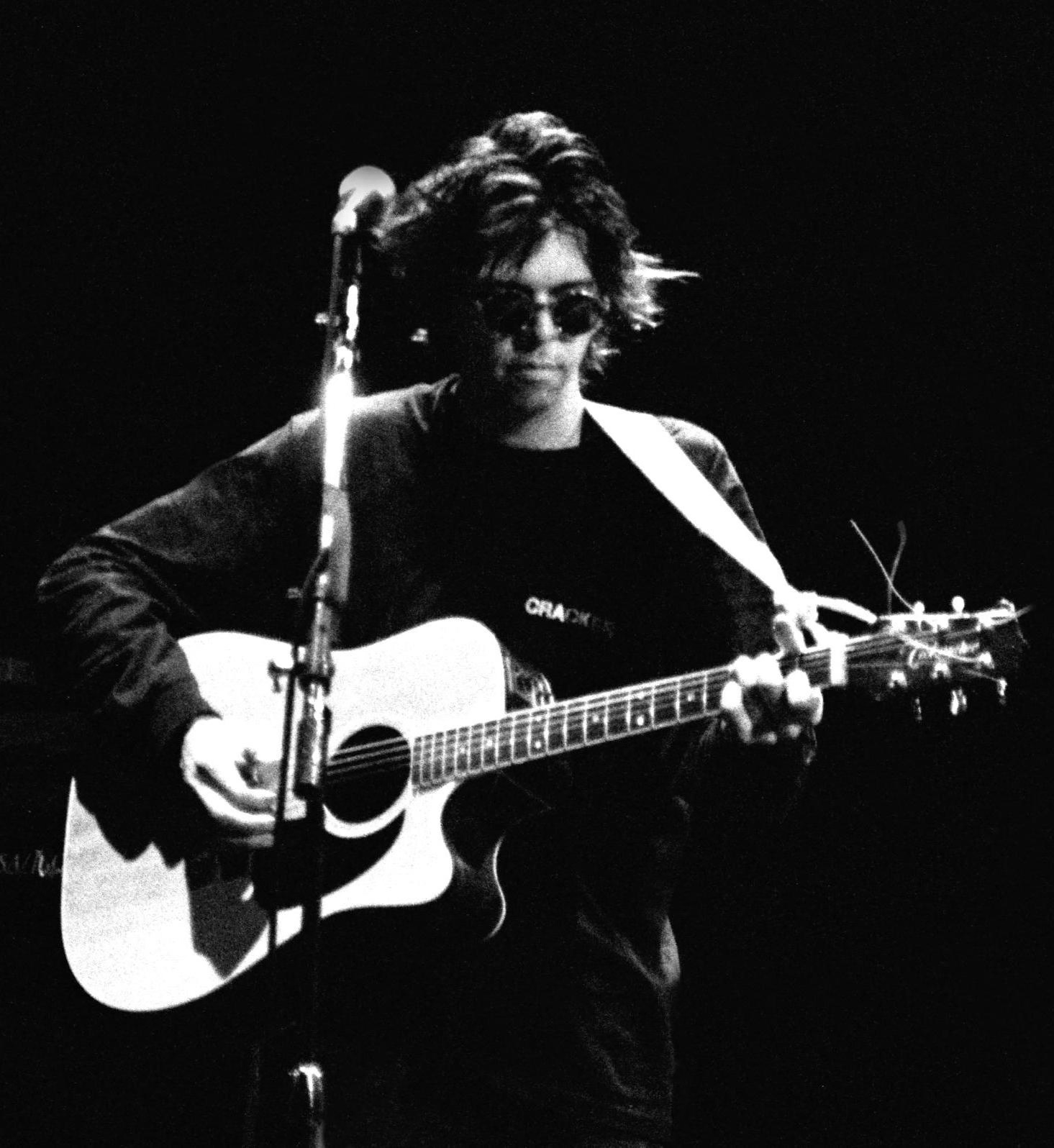
By Osmund Geier – Own work, CC BY 3.0, https://commons.wikimedia.org/w/index.php?curid=8421064
David Lowery- Fathers Sons and Brothers is a reader-supported publication. To receive new posts and support my work, consider becoming a free or paid subscriber.
Stream or order this album here.
Throughout my life, I’ve had many dogs and many cats. They have richly rewarded me. I couldn’t tell my story without at least mentioning some of the key animals in my life. When I started dating Mary, I found a kindred spirit in my love for animals. But Mary was even more devoted—she had a special calling to rescue the stray, the unloved, and the hard-luck cases. Three dogs were especially important in the early years in Richmond.
Mary had found some kind of greyhound mix, nearly completely hairless from malnutrition and mange, wandering through traffic in the Carytown neighborhood of Richmond. She named her Daisy, and she was actually a fine-looking dog once her hair grew back. People constantly asked what breed Daisy was, thinking she was some kind of purebred hound or working dog. Normally, she was well-behaved, but she never completely lost her street-dog ways, and we had to constantly be on guard with our food. If she thought she could get away with it—and the reward was great enough—all training was overridden. One time, I found her on the kitchen counter, delicately removing sausages I was cooking in an iron skillet. She also developed a habit of running to the door and barking as if someone had knocked. I fell for it once and returned to find my plate of Greek spaghetti missing. Daisy was nowhere to be found.
Jed was a black lab-chow mix, or something like that—a fairly large dog. Mary first noticed him and his sister when they were maybe four months old. They were living in the woods behind a 7-11 on Doswell Rd, just off Interstate 95. Clearly, someone had dumped them there. The two of them had figured out how to beg for food from the customers at the 7-11, but they had gone almost completely feral at this point, and Mary couldn’t catch them. Eventually, someone managed to catch the sister and take her home, but this left poor Jed in the woods alone.
One day, Mary noticed that Jed was not there. She asked the manager at the 7-11, and he said that the game warden had taken Jed a few days ago. When Mary called the game warden, she learned Jed was scheduled for euthanasia. Mary said she wanted to take him home. The warden was skeptical. He thought that Jed, now about six or eight months old, was going to be difficult to domesticate again. Jed would snap at anyone who tried to approach him in the kennel. Eventually, the warden relented. He caught Jed with a loop and pole and put him in the truck. He drove him to our property.
We were now living in the country, and I had fenced about an acre and a half of the property around the house. The warden just drove into the middle of the property, and we coaxed Jed out. He bolted toward the shed/recording studio and managed to get underneath it. Eventually, he made himself a little den under there. We took food to him and gave him water. After a few days of this, we introduced our other dogs to him. That is always a scary moment, as they were both much smaller than he was. Fortunately, he was very friendly toward other dogs, and when our littlest, Lucy, invited him to play, he joined in. Soon, he was out patrolling the property as part of our little misfit dog pack. But he remained half-wild; you couldn’t approach him and pet him.
Our old country vet suggested we just buy a block of cheese and try to feed him little treats by hand. Why cheese? The vet sort of shrugged and said, “Dogs love cheese.” This worked rather quickly, and suddenly we were able to pet him (briefly) or give him a scratch under his collar. But he would be almost a year old before he would come in the house.
It was winter. He’d finally started sleeping in the doghouse we had on the porch next to the front door. I had a heating pad in the doghouse. Finally, one night we had one of those polar vortex events, and the temperature was forecast to go down to minus five. I’d been trying to get him to come in the house almost every night for a while. We had this giant wood stove in the foyer of the old farmhouse. It would heat the entire house. He’d taken to standing in the door if it was open and bathing in the heat from the stove, but he wouldn’t come in. But this night, we opened the door, Mary talked to him a little bit, and he walked in on his own accord. There were four or five cats sprawled on the floor around the wood stove. A couple of them darted off, but others barely moved, and he joined them on the floor next to the stove.
Eventually, Jed became the most normal and well-behaved of all the dogs: good on a leash, good with other dogs, friendly to people. With one curious exception—he didn’t like Johnny Hickman. We have no idea why, but if I didn’t keep him under voice command, he would circle behind Hickman and nip at his rear. He made pretty good contact once. Hickman stopped visiting us after that.
Mary found Lucy in an alley in the Church Hill neighborhood of Richmond. She heard an animal clearly in distress and went running. The dog had apparently fallen off the second-floor balcony of a house—at least, that’s what her owner told Mary. But that didn’t seem right. It wasn’t that high, and Lucy clearly had a severely broken right rear leg. It seemed more like abuse. Mary just scooped Lucy up, and we took her to the vet. She didn’t ask permission. Lucy required some pretty major surgery, and in the end, they basically fused a joint so that she always walked with a limp, or when running, swung that leg out in circles.
She was the smallest of the dogs and quickly established herself as the alpha. In my pickup truck, there was a specific order: she had to sit in the middle next to me, Mary got the window, or if Mary wasn’t there, Daisy was next to her and Jed was at the window. She would snap at the other dogs until they were in the proper order.
We always had to warn people not to pet Lucy because we never knew when she might bite someone. She was mostly fine with people petting her, but when she was done, she’d just bite you to make you stop.
The one exception was Mark Linkous, the singer of Sparklehorse. As mentioned previously, Mark and his brother were the first people I met in Richmond. Mark and I became very close, and he would stay with us all the time. Lucy loved Mark. She never bit him. Mark grew really fond of Lucy and would just come by the house sometimes and pick Lucy up while he drove around and did errands.
There are a few songs that Mark wrote that seem as if he’s referencing a pretty girl, but he’s actually talking about Lucy. “Happy Place” is entirely about Lucy, specifically her habit of controlling the dog food dish despite being significantly smaller than his dogs. She would take a mouthful of her food away from the dish and eat it in her “happy place” when she judged it was time to let the other dogs eat.
Mark loved dogs. And babies. When my oldest son was born, he was the first one at the hospital to visit.
He also gave my son his middle name, or at least lobbied hard for it (it’s a Cormac McCarthy reference; he was a big fan). Mark called from the front desk to my wife’s room, and the nurse picked up the phone and said, “Is <redacted> here?” She was very confused—Why was the baby getting a phone call? It’s an unusual name, Perhaps its a family name? is there a <redacted> Sr?
The sad thing about this is that Mark and his wife were not able to have children. I joked in a previous song about the old trope, “A baby will fix everything,” but in this case, I don’t know—maybe it would have. The science is mixed on generic self-reported happiness levels for parents, but there is evidence that fathers who are not estranged from their children are less likely to fall into “hopelessness” and die deaths of despair. Knowing Mark for a very long time, my hunch is he might not have taken his life if he had the sense of purpose and responsibility that comes along with fatherhood. There is certainly research that shows that fatherhood has the greatest effect on reducing deaths of despair among middle-aged rural white males—a demographic to which Mark belonged. Unfortunately we will never know.
Mary found Jed behind the 7-11 out on Doswell road
It took a while to tame him but then it took
It was minus 5 one winter night
The wood stove blazing hot
He came into the house all on his own
Jed never liked the guitar player
He was always trying to bite his ass
Other wise that dog loved everyone
Lucy had a broken leg
From a fall off a balcony
That’s what her owner said we didn’t believe
Took little Lucy got a pin put in her leg
And no, we never took her back
I guess we are dog nappers
Lucy bit everybody except for Mark Linkous
He would pick her up for rides in his car
He even wrote two songs about her
And everyone just assumed
They were love songs about a beautiful girl
Mark loved dogs and babies he came to visit my day-old son
He took a big sniff of his head and said “I love that smell”
Mark loved dogs and babies and may have a happier life
If he and his wife could have had little babies of their own
Or maybe not
++++++++++++++++++++++++
David Lowery: vocals, guitar and bass
Luke Moller: fiddles
Velena Vego: tambourine
David Lowery- Fathers Sons and Brothers is a reader-supported publication. To receive new posts and support my work, consider becoming a free or paid subscriber.
 300 Songs
Leave a comment