#101 Pretty Girl From Oregon Hill
Stream or order the new album here.
“Let It Roll Down The Hill” (#15) and “Pretty Girl From Oregon Hill” are companion pieces that introduce the two main characters from my time in Richmond: the city’s Oregon Hill neighborhood and, more importantly, my first wife, Mary. In “Let It Roll Down The Hill,” I sing about meeting Mary after moving to Oregon Hill, but that’s not entirely accurate—she was actually the reason I moved to Virginia in the first place.
I met Mary a year earlier at a party in Oregon Hill, after a 10,000 Maniacs show at The Landmark Theatre (then called The Mosque). Natalie took me to a party in the neighborhood, where I noticed this wild-looking punk rock goth girl—Mary. She had long black ringlets, wore vintage black lace clothing and combat boots, and was totally cute. A biker saying came to mind: I’d gotten a lot of advice about women from the bikers I worked with—most of it not safe for work—but one piece stuck with me: “It’s okay to date foxes, but marry cute.”
Mary lived in one of those funky, crumbling row houses that had lost the homes on either side. Her place was deeper into Oregon Hill, closer to the canal, where many houses were boarded up, abandoned, or already razed. One time, she came home from work to find that the entire entryway—door, frame, and sidelights—had been removed. The landlord had apparently salvaged it from one of the houses down the street that was about to be demolished, but the owner of that building had come and repossessed it. Mary had a cat and a super-energetic mutt named Daisy. She waited tables at a restaurant and drove a beat-up old Honda Civic. Like I said—a punk goth girl from Northern Virginia.
The contradiction was that, despite her rough teenage years and being on her own since she was eighteen, Mary came from a very respectable family—what we might now call part of “the Deep State.” Her mother and stepfather worked for USAID at various embassies around the world. When her stepfather died, it was revealed that he had been a CIA officer. Her father held a high-ranking position at the Office of Management and Budget, working out of the Old Executive Office Building, which is part of the White House complex.
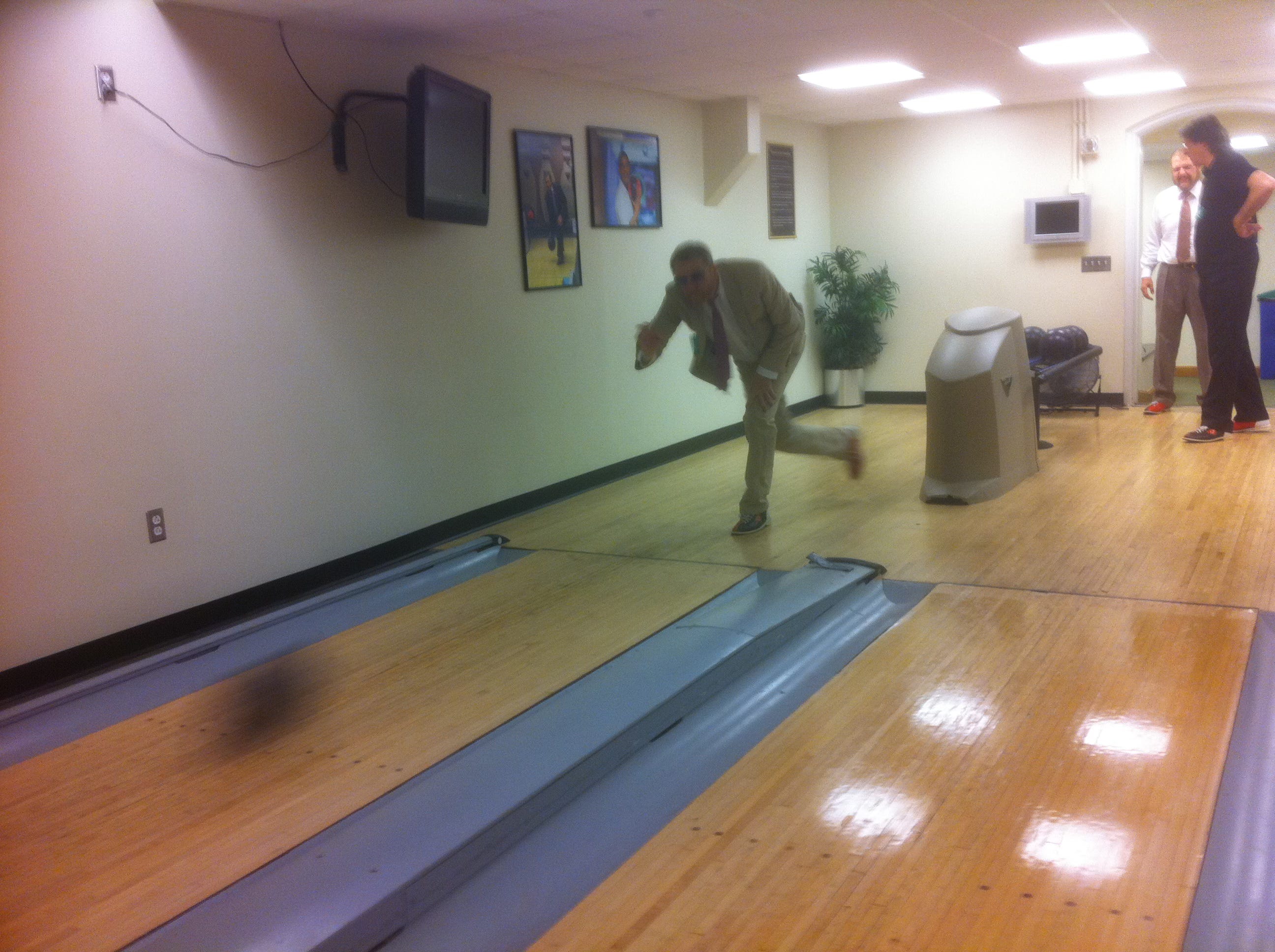
Once, while walking through the building, we saw Vice President Dan Quayle sitting alone in a waiting area, wearing a strangely self-satisfied grin. Mary remarked that he looked like a cat who wasn’t supposed to be sitting on the nice furniture. I didn’t realize it at the time, but that was the first of many visits I would make to the White House and other centers of American power. For example, years later, I bowled at the White House bowling alley—here’s a photo as proof.
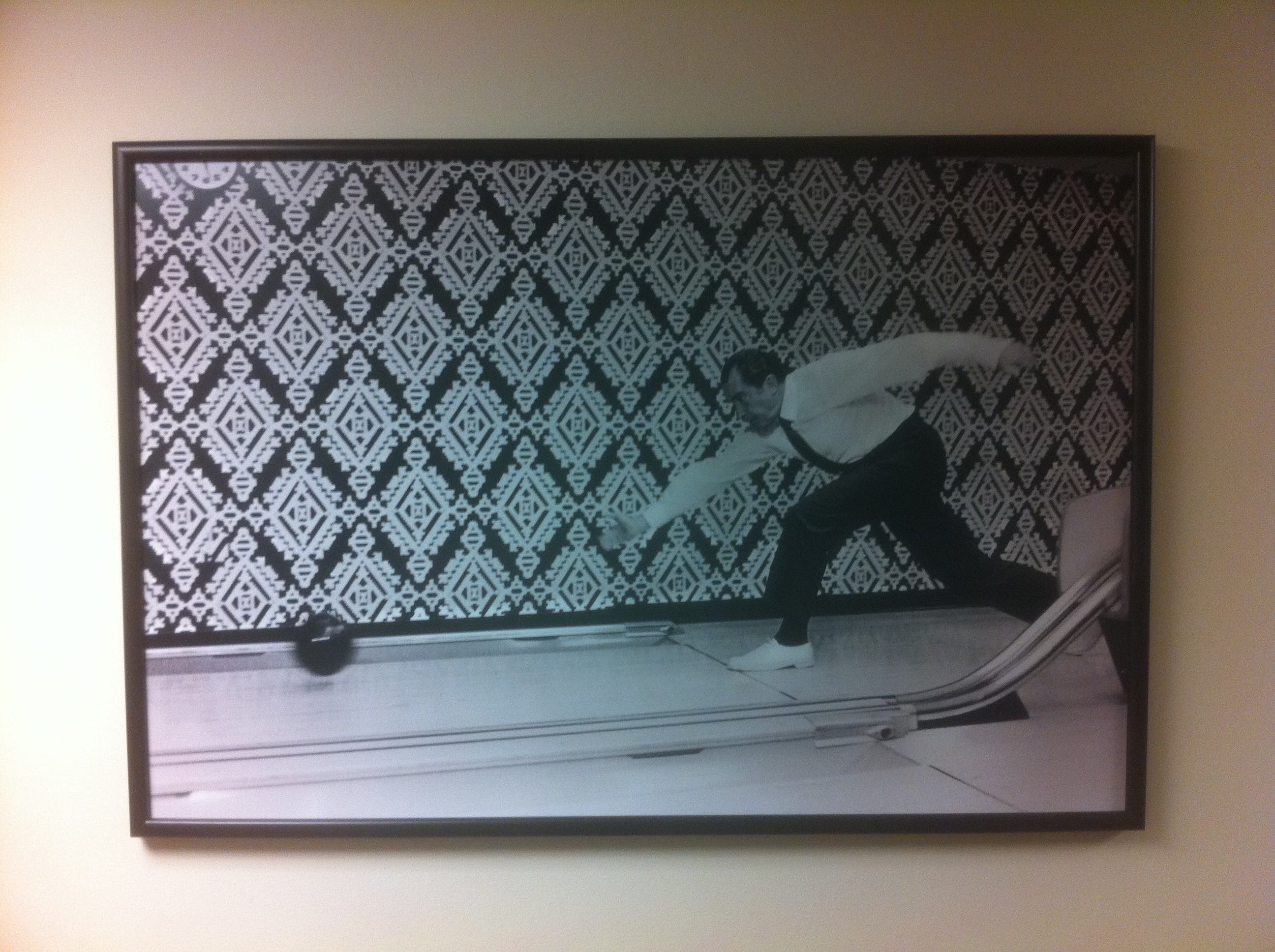
(By the way, here’s a photo of Nixon that is on the opposite wall—notice his toe just over the line. Still, look at his form. To quote Walter Sobchak: “That creep really can roll.”
Back then, Richmond hadn’t yet been discovered and rehabbed by money from Northern Virginia and beyond. Much of the city’s commercial core was empty, boarded up, and abandoned. The 1990s crime wave hit hard, and for a time, Richmond had the highest murder rate in the country. The city was full of deserted buildings. Mary was adventurous—she’d be the first to climb through a window of an abandoned building if it looked interesting. I’d hang back, worried: “You think it’s safe? Are the cops going to come after us?” She’d grow impatient, say “Oh, c’mon,” and disappear inside in a flash of black curls, lace and combat boots. I’d nervously follow. Many of those buildings have since been renovated into upscale homes, galleries, and fine dining restaurants. Ten years later, we’d be invited to grand openings or housewarming parties and tell the new owners we’d been in their building many times before, and liked what they’d done with the place.
The reason I include this song in the set is because I had a really good life with Mary, she’s a great mom and she was incredibly supportive during the early days of Cracker. By Thanksgiving 1990, Johnny Hickman had headed back to California, somewhat discouraged and disillusioned. Though we’d managed to demo twenty songs and submit them to the label, they hadn’t offered to let us start recording, and there was definitely no more money coming in. That’s the thing about record deals: all the optionality is on the label’s side. They could keep us in limbo for quite a while, and that’s exactly what they did. It would be almost a year before we were allowed to start recording. Things got pretty dark for me, but Mary remained positive and supportive. She’d listen to my long ruminations about the best path forward—whether I should give up, get a job, or go back to grad school. Some of these conversations happened late at night after her long shifts at the restaurant. She’d come home with a bottle of wine and tell me to join her in the kitchen while she made pasta at 2:30 in the morning. Her surrogate mom was Stella Stavros, the legendary matriarch of one of the Greek restaurant families in town, and Mary had learned to cook vegetarian versions of amazing Greek and Italian dishes directly from her.
Mary was—and still is—a good friend to animals, always rescuing cats and stray dogs. Some we fostered and adopted out to family and friends; others we kept. At one point, we had seven cats and three dogs, almost all hard-luck cases. Jed had gone almost feral before we found him, Daisy had almost no hair from malnutrition-induced mange, and Lucy had a broken leg. Similarly, I felt like I was a stray she took in. She showed me kindness and encouragement, when others did not. And for this I owe her my life.
Pretty Girl from Oregon Hill
I told myself that no one has the answers
It was just a way of lying to myself
So when a pretty girl from Oregon Hill
Said come and stay with me well I obliged
We had so many cats it was like a shelter
I brought my things from California
I brought a friend to help me make a record
But he fled back home when the winter it arrived
And the pretty girl
She came from Oregon Hill
She by me and for this
I owe her my life
And the pretty girl
She came from Oregon Hill
She waited tables all through the winter
In wooden house we called big dirty yellow
The only heat it came from kerosene
In the middle of the night
We’d walk down to the old part of town
They called Gunsmoke to buy more kerosene
And the streets they were lined with ancient buildings
Porticos straight from the gilded age
Opulent poverty broken down and half abandoned
You could almost see the ghosts
In the window frames
And the pretty girl
She came from Oregon Hill
We danced in the ruins of
The planter’s mansions
And the pretty girl
She came from Oregon Hill
The boxwoods they shone
Silver in the moonlight
Went to visit your mother in Annapolis
She lived in house that was older than the United States
You father works at The White House now
So baby why you keeping me around
Sweet that you’re down here slumming it with me
Sweet that you’re down here slumming it with me.
+++++++++++++++++++
David Lowery: guitars and vocals
Luke Moller: strings
 300 Songs
Leave a comment