Archive for May, 2025

#88 Superbloom: The Coachella Valley, Cousins and Car Theft

Posted in Uncategorized on May 31, 2025 by Dr. David C Lowery

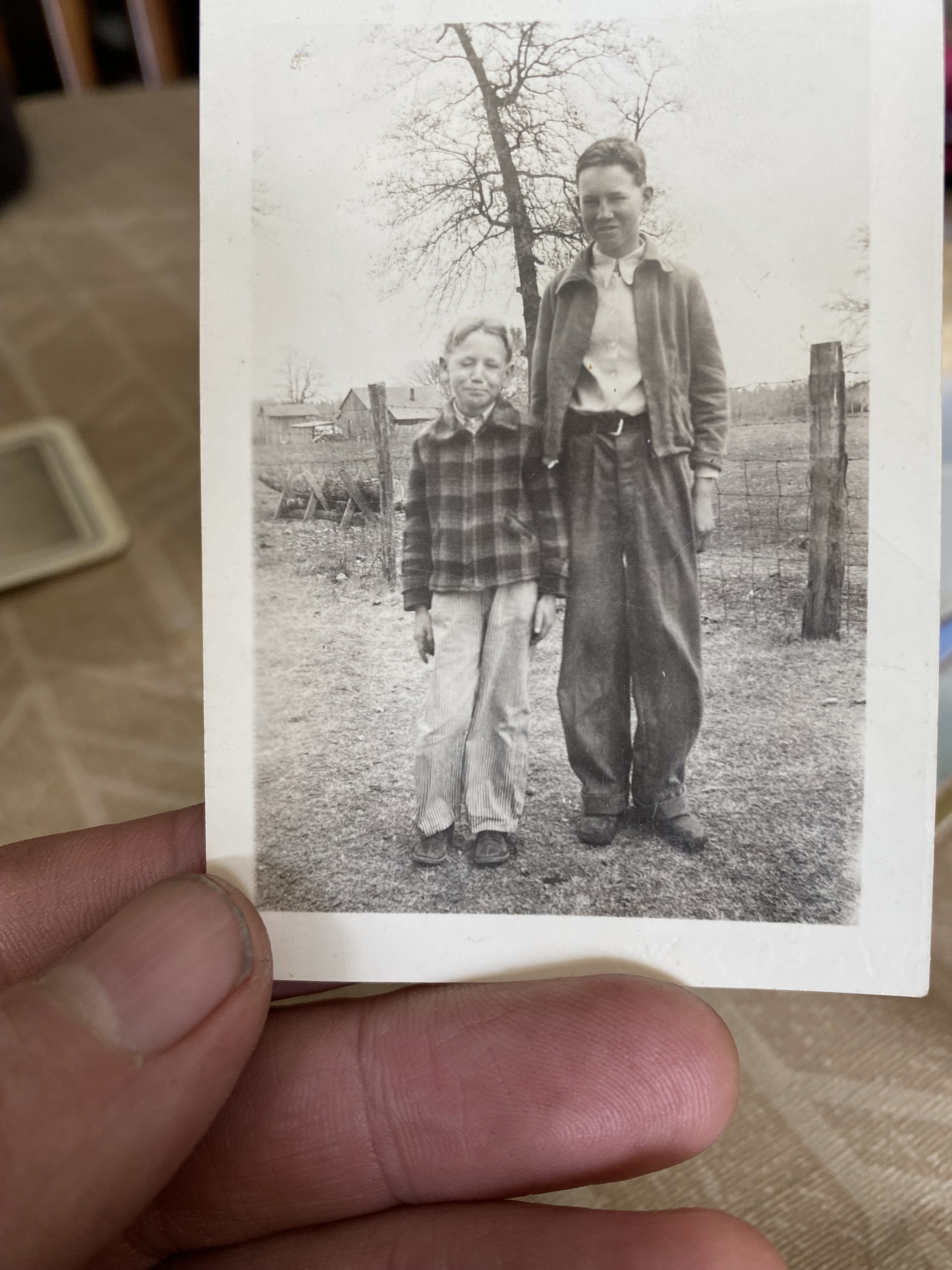
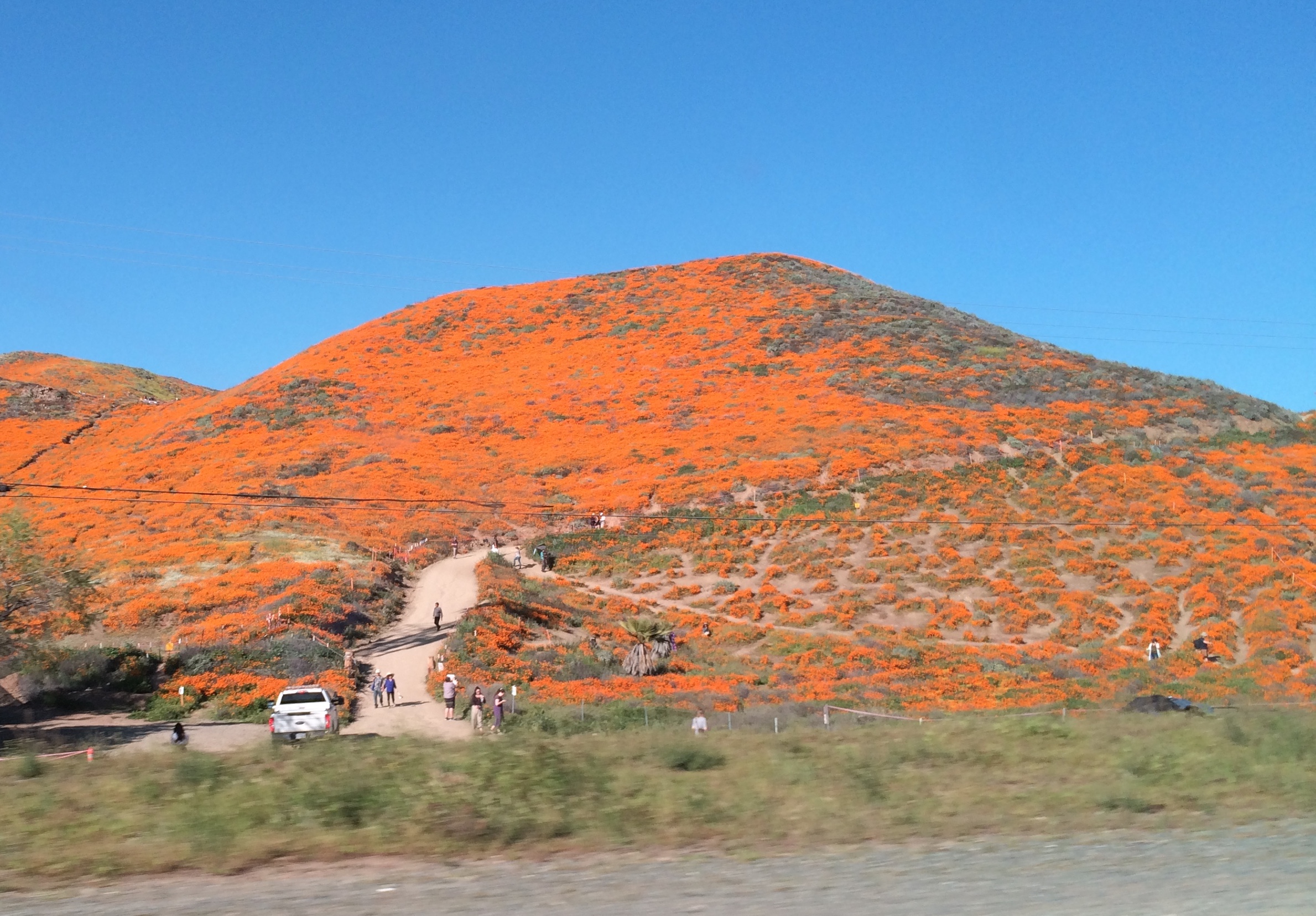
By Bluesnote – Own work, CC BY-SA 4.0, https://commons.wikimedia.org/w/index.php?curid=77472535

You can order or stream the album at this link: https://davidl.lnk.to/FSB

In the late 1960s, my family moved from Spain to Southern California for my father’s next military assignment at Norton Air Force Base in San Bernardino. This area, often called the Inland Empire, was distinct from the Los Angeles metropolitan area, separated by agricultural and ranching lands. When we arrived, it was still a major citrus-growing region. The arid valley, with proper irrigation, was well-suited for citrus farming. Historic orange crate art, the kind you often find framed in antique shops or on the wall of a motel lobby, is usually from farms in this region. The region also housed key industrial institutions crucial for the Cold War, including a steel mill, large railroad yards, defense contractors, and numerous military bases. It was the kind of place where local cowboys, bikers from the steel mill, and GIs regularly clashed in honky-tonks.

My parents were pleased with this assignment because my father’s family had largely emigrated from Arkansas to the nearby Coachella Valley, or “low desert” as the locals called it. The Coachella Valley is now famous for the Coachella Music Festival, but back then, it was known for Palm Springs, a sort of Hollywood in the desert on the west end of the valley, and a vast expanse of winter farmland on the east end, stretching to the Mexican border. The east side of the valley attracted seasonal farmworkers, many from Mexico, but also poor southerners and Oklahomans who came to pick crops in the winter. My grandparents had been making trips from Arkansas to Indio since the munitions plants in Arkansas closed after WWII. In the late 1950s, they moved permanently to Indio. It’s funny because their house was right across the street from the Polo Grounds, where the Coachella Music Festival is now held. If I could go back in time and tell them that one day one of the biggest music festivals in the world would take place across the street from their house, they wouldn’t believe me. “Here? In Indio? In this godforsaken sun-blasted landscape? Here?”

A superbloom is a rare and spectacular botanical event where a large number of wildflowers simultaneously bloom, usually in desert or semi-arid regions. Some of the most spectacular superblooms occur in the Coachella Valley and surrounding mountains, typically after a particularly wet desert winter. The seeds of the wildflowers may remain dormant for years but erupt into blooms when there is abundant rain followed by warm weather. The blooms usually occur in late winter or early spring, transforming the desert from sand into a sea of orange and purple flowers. It’s technicolor, like an acid trip without the acid.

And then just as suddenly, it’s all gone. Dead. Just sand-blasted rocks and relentless heat again.

This was also the Coachella Valley in the 1960s. The west side of the valley was chic, exploding with luxury hotels and golf resorts. This was when Sinatra and other celebrities came here and built their mid-century modernist poolside mansions, swank cocktail lounges, and after-hours nightclubs. Movie moguls, actors, directors, writers, athletes, and mobsters. It was technicolor. The other side of the valley was plainer but just as robust. Desperate dreamers rolled down Route 66 and later Interstate 10 or Interstate 40 to live the good life in California. They didn’t have enough money to live on the coast, so they settled in the Coachella Valley. You didn’t have the ocean, but you had the sun. Well, you sort of had the ocean—the Salton Sea—but that’s another story for another time. These were the poorer cousins to the Californian fortune seekers Joan Didion describes in Slouching Towards Bethlehem. But being poorer wasn’t a problem. Desert land was cheap, and entire subdivisions were thrown up overnight. One aunt and uncle bought their house for $8,000. People worked at gas stations or in farm packing sheds, but managed to buy a car and a house. And if you were still too poor for that, you bought a trailer and moved into a trailer park. It was a superbloom. It was an economic magnet for people in Arkansas and eventually all my aunts and uncles moved here to join my grandparents. And it was glorious for a time.

Each summer, my parents would drive us down to the desert, where we would stay for a week with my grandmother or sometimes with an aunt, uncle, and cousins. My mom and dad would then return to the Inland Empire. These visits were usually uneventful. We often stayed with my grandmother or my aunt, who was a dispatcher for the police department. In the early ’70s, when I was about 13, my last set of cousins moved to the Coachella Valley. My parents decided I should spend a week with them since I hadn’t spent much time around them.

They were wild. I knew it immediately. There was one boy cousin my age, Gary, an older girl named Norma Jean, probably about 15 or 16, and then two older adult boys—twins with red hair. As my grandmother was fond of saying,”Red hair is how God marks the crazy ones.” Indeed. Their dad, my uncle Johnny, had dabbled in being some sort of hellfire-and-brimstone preacher. He was obviously very religious, but he’d also cuss up a storm. A mercurial and volatile personality, not without his charms. (More on him later in Piney Woods)

I arrived on a Sunday, and it was a typical Sunday dinner. We watched baseball and had an early night. In the morning, my aunt and uncle went to work, and the two older twins disappeared for a while but came back shortly with a car—a late-model convertible of some kind. They wanted to take me for a ride in it, but first I had to promise not to tell my uncle and aunt. They told me their father didn’t want them having a car, so they had secretly bought it and parked it a couple of blocks away at a friend’s house so he wouldn’t know. This seemed a little odd to me, but hey, they were an odd family. We drove around for a while, they dropped me off at the house, and then went to park it at their friend’s house.

The next day was also interesting. The twins left for a while and came back with remote control cars for me and my younger cousin Gary. We were having a blast with these in the backyard when we noticed the police in the neighbor’s backyard. My cousin asked them what was going on. “Someone robbed this house. Did you see anybody come over the fence here?” There was a clear trail of footprints that led out of the back of the neighbor’s house across the sand to the fence. My cousin’s backyard had a lush lawn, so even if the robbers had come into this yard, there would be no trail to follow. Gary and I didn’t think anything of it. When my aunt got home, one of the twins asked for the toy cars back. “My pop will be home soon, and he is real strict. He doesn’t like us playing with toys. I’ll put them under my bed.”

The third day was even stranger. My younger cousin Gary disappeared with the twins. I asked Norma Jean where they went. “They went to Sears,” she replied. Norma Jean and I played cards and watched TV for a while, and then the phone rang. It was clear the caller wanted to speak to my aunt, her mother, but Norma Jean was explaining she wasn’t home while also trying to find out why they wanted to talk to her.

Suddenly, Norma Jean said, “Oh, hold on, it looks like she just got home.” She put the phone receiver down on the table and proceeded to act out a radio play, complete with sound effects. The door loudly opening. A greeting to the children in an adult voice, “Mom, someone from Sears wants to talk to you on the phone,” in her own voice. Loud heels across the linoleum. “Hello, this is Mrs. Kelly,” now in an adult voice. The conversation went on for some time, with my cousin Norma Jean expertly playing her mom. Apparently, the boy cousins were shopping at Sears but trying to purchase things with collectible silver dollars. “Well, their grandfather gave them those coins. If they want to spend them on nonsense, that’s their problem.” Amazingly, this seemed to work, and later the twins came home with, among other things, a couple of .22 rifles. These also went under the bed before my uncle came home.

But nothing could have prepared me for what happened the next day. I may have been only thirteen, but it was clear to me what was going on. Without my aunt and uncle around, I didn’t want to be in the house with my insane cousins, so I asked Norma Jean if they could take me to my grandparents’ house since I was feeling homesick. Norma Jean was always sweet, and she suddenly became the big sister. “Of course, baby. I’ll get the twins to drive you over there.” This didn’t sound like the best idea, but I was desperate. The twins left to get their car, but they were gone for quite a long time. Just as I was about to ask Norma Jean to call my grandmother, the twins showed up, each with a car. One was in the convertible, the other in a four-door sedan. I was told to get in the sedan.
We followed the convertible, but instead of heading west toward my grandparents’ house by the polo grounds, we headed south into the farm fields. It was summer, and most of the fields were fallow. It was unbearably hot. We turned off the highway and drove down a dirt road through the fields. Up ahead, I could see the Colorado River aqueduct. My cousin pulled the convertible right up to the edge. He got out of the car and walked around to the other side. He was messing with something in a bag, then he threw it into the back seat and came running back to our car, alternately laughing like a maniac and shouting, “Go, go, go!” Flames began rising from the convertible, and our car kicked up a cloud of dust as the wheels spun in reverse in the dirt. I started to sob uncontrollably. The twins suddenly became the best big brothers. “Oh no, it’s okay. Don’t cry. Everything’s all right. You’re not in trouble. You weren’t here. Let’s go to Grandma’s. It’s okay.” The twins were playing the local FM album rock radio station in the car as we drove to my Grandparents. At some point Ozark Mountain Dare Devils came on. “If you want to get to Heaven, you got to raise a little hell.”

And that was it. That was the superbloom. An explosion of unrestrained, misguided young male violence. Technicolor flames. The orange bloom of a burning car on the aqueduct.

And really, that was the end of the superbloom for the Coachella Valley also. By that time, Palm Springs had already begun its decline. It was seedy and shabby around its edges, soon to be the dark muse of a series of pulp crime novels by Joseph Wambaugh. Then the Salton Sea would begin to dry up. As the sea grew more shallow, strong winds would bring the sediment at the bottom to the surface, and some days the whole valley would smell of death.

But it was fun while it lasted.

Storm clouds came up from Mexicali
Cast shadows on the Salton Sea
Here with my father’s family had settled
From Arkansas to the Coachella valley
Like the Grapes of Wrath in the ‘70s

My grandfather packed dates
Near the polo grounds
And he sometimes mowed people’s lawns
Grandma was a housekeeper in Palm Springs
Or the Bermuda Dunes country club

One summer went to stay with cousins in Indio
They were fleeing poverty in Arkansas
My uncle was a hellfire Baptist minister
My cousin Norma Jean that’s her name she was sweet
But her twin brothers trouble for the law

The twins stole a car
And they took me to watch them
Burn it by the aqueduct
Then they robbed the neighbor’s house
I was frightened and ran away.
Never told my grandfather what they’d done

Dark haired Mary in the eighth grade
Her mother was from Mexico
Her father was a soldier
And she asked me to the dance
Sat in the bleachers just held hands
One slow dance in at the end

It rained and snowed a lot that winter
In the spring came a Super Bloom
The desert was a sea of purple and orange flowers
From Cabazon on down to Mexico

+++++++++++++++
David Lowery: guitars and vocals
#87 Plaza de Toros: An Andalusian Childhood

Posted in Uncategorized on May 30, 2025 by Dr. David C Lowery

Sometimes I compare my early childhood to that of my friends, my wife, or members of my band, and marvel at how unusual my experiences were, especially my memories of Spain. Sometime in the summer or fall of the year when the sea froze, my father returned from South Korea. He had returned to take us to Seville, Spain. My father, an NCO and specifically a Tech Sergeant in the U.S. Air Force, had received his next assignment. He was part of a small detachment of U.S. Air Force personnel assigned to a Spanish airbase just outside Seville. This airfield is now the commercial airport for Seville, but at that time, it was called Santa Clara.
Unlike the larger U.S. airbase nearby at Morón, there was no on-base housing for us. Instead, we lived in a small development on the outskirts of Seville, next to the Coca-Cola plant. We were not fenced off from the local population as many service member families are in other parts of the world. We were constantly in contact with the locals. Peddlers with their carts were always up and down the streets of our neighborhood, selling not just food and household wares, but also offering various services. Seamstresses, cobblers, knife sharpeners, and even a doctor with two nurses in a sort of ambulance came through offering their services.

Spain was very poor at the time, and the wage disparity was so great that even on a Tech Sergeant’s salary, we could afford a housekeeper. We called her Gracias, but that was just the first word of a very long and unusual name, an entire sentence that began with Gracias. The name was the result of some sort of religious vision her mother had; that’s all we knew.

Fittingly, Gracias was very helpful to my mom since my oldest sister, Sandra, was born with cerebral palsy. Although her case was relatively mild, our household always needed a little help (more on this in “Tell Me How Does Your Sister Roller Skate”).

Gracias would play the local radio while she helped out around the house. Mostly, what was played in those days were traditional Andalusian Sevillanas and sometimes pure Flamenco. Sevillanas while similar to Flamenco are more like traditional folk or pop music, while Flamenco, being more improvisational, is edgier and wilder, more like jazz. At least that was the way it was regarded in those days.

My parents, like many military couples, were already deeply into music, mostly American country, blues, and rock. I guess it was the thing that kept them connected to their homes. (My mom, growing up next to a U.S. airbase, was deeply familiar with American music from a young age and regarded it as her native music as well.) Gracias brought Andalusian music into our house. My parents were always quite open-minded when it came to music, culture, and food, and they quickly adopted Flamenco and Sevillanas into their LP rotation.

The Feria de Abril is a giant fair held in Seville each April, where Sevillanas music and dance have become synonymous with the festival. Gracias and my mom made traditional dresses for themselves and my sisters, blending in completely with the locals each April. My two older sisters and my mom even learned a few of the dances. As my mom would say, “we went native.”

My mom had a knack for adopting local accents. Unlike your friend who spent a semester at Oxford and returned to Morristown, NJ, with a slight British accent, my mom’s American accent was flawless. Growing up in the States, most people didn’t realize she was English. When we lived in Spain, Gracias and her friends didn’t realize my mom was English either. When they found out, they suddenly had an urgent story to tell her. Apparently, an Englishman regularly appeared in the local park in the evenings wearing women’s clothing. “Is it a plaid skirt?” My mom asked. Gracias and her friends conferred and said yes, it was a plaid skirt, although they seemed a little unsure. “That’s a Scotsman,” my mom told them. “That is their traditional dress.”
A few weeks later, my mom happened to be in the park with Gracias, and they saw “The Scotsman,” who turned out to be a full-on drag queen. Although his long skirt could be described as plaid, it was not a kilt. “Gracias, that is not a Scotsman. That is an Englishman in a dress.”

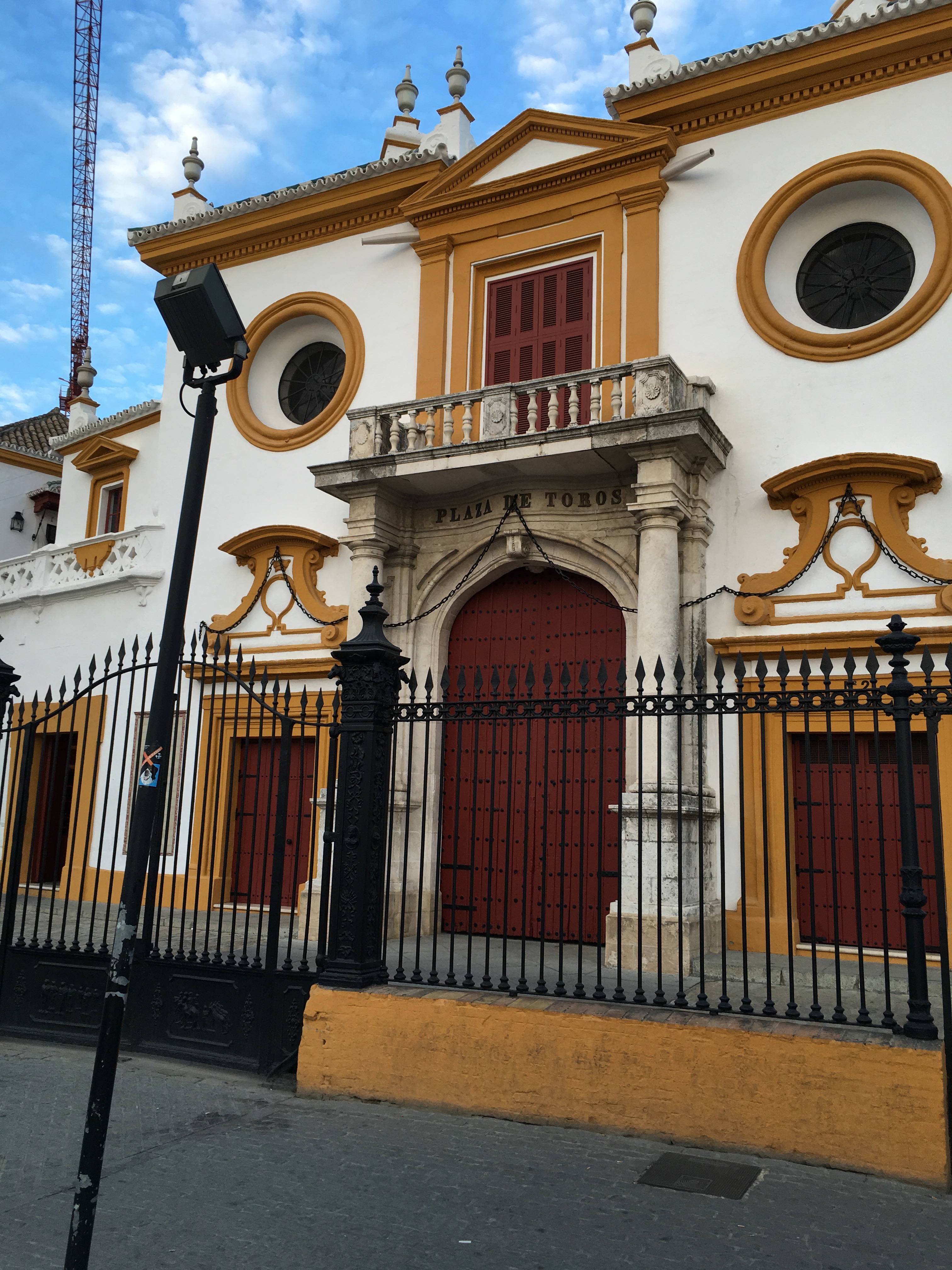
While everything I describe sounds delightful, there was also a dark edge. Bullfights, a cruel sport, permeated this beautiful region of Spain. The imagery was everywhere—paintings, carvings, even on china. Bullfights were televised, and my dad would set up the TV in the courtyard for families to watch. We had toy bullfighting sets and even a children’s book, Little Egret and Toro by Robert Vavra. The story follows a cattle egret who warns a bull about the dangers of the bullring. During a crucial moment, the egret and his friends fly around the bullring, causing the matador to mistake them for white handkerchiefs and spare the bull. Although the book was meant to soften the brutality of the sport for children, it had the opposite effect on me, humanizing every bull. Even egrets made me sad, as I imagined each one had lost a bull friend in the Plaza de Toros.

I remember waking up
To the bright sunlight
Streaming through the blinds
From the courtyard rose Sevillanas
And American rock and roll
My father in his Sunday best
Played records for his friends
I tasted sangria from a half full cup
And my sister slapped my hand
Then we followed on
The swelling crowd
To the Plaza de Toros
 
Now come the picadors
The crowd gets to their feet and roars
Papa do they really kill the bull?
Then comes the matador
Behind his back a gleaming sword
Papa do they really kill the bull?


This all happened while Franco was still alive and governing Spain. Sometimes I hear my friends say things like “we are becoming a fascist country,” and I feel like slapping them. While I may not like the direction of our politics, we are not a fascist country. It’s funny, but I guess you could say I grew up in a fascist country. I was young and an American with a U.S. Air Force family, so I was mostly isolated from the brutality. But even I wasn’t completely insulated. The Coca-Cola plant next to our neighborhood went on strike, and the Guardia Civil, Franco’s paramilitary police, were brought in to put it down. It must have been the summer of ’67, during the so-called Prague Spring. There was unrest all over Europe, and even under Franco, there was unrest in Spain.
One day, I was in the old city with my mom. We were shopping when a demonstration began—possibly another labor strike. People were marching and chanting. The city police or Guardia Civil suddenly appeared, and people started running. A shopkeeper motioned us into his shop and rolled the metal door down as the chaos increased outside. We sat there listening to people shouting and police with bullhorns. There were also shots fired; I don’t know if it was tear gas, rubber bullets, or live rounds. But I wasn’t scared because the adults around me were acting normal. The shopkeeper asked me about my toys and fed me sweets. We were rarely allowed Coke, but the shopkeeper gave me a full bottle. My mom, who grew up watching German bombers fly over her house, was laughing and making jokes with the shopkeeper.

 
In the ancient streets
Of the old city
Comes a marching crowd
In unison
They chant and sing
Hold their placards in the air
The shopkeeper motions
Quick come inside
Then he rolls the shutters down
(And then) the shots ring out
The men run and shout
The old man gives me a coke
 
We emerged at dusk
And the water in the street was pink
Mama do they really kill the bull?
Then I thought I saw the matador
He held up high a gleaming sword
Papa do they really kill the bull?

Next to the Coca-Cola plant and directly across the street from our house was a field littered with the rubble of an old building. It fascinated the neighborhood boys, as there were all sorts of treasures to be found: a rusty iron bar, a piece of melted glass, a sprocket from an industrial machine. One sandy area yielded numerous finds, making it a favorite spot to dig. We discovered a large ornamental metal button from a coat one day, something that looked like a blade another day, the metal rim of a wheel, and part of an axle. Eventually, we found a belt that normally holds bullets. “A machine gun belt,” one boy said, holding it up triumphantly. An older kid disagreed, “It’s too small; it’s a bandolier.” There were no bullets in it.

Everyone started digging more, and someone unearthed a textured metallic cylinder with a wooden handle. A couple of boys were poking at it when an older boy screamed, “That’s a hand grenade!” We all ran off terrified, screaming for our mothers (our fathers were at the base). As we rounded the side of our house, we startled some Roma men who were stuffing sheets and clothing from our clothesline into the back of their cart. They took off running as well.

Someone’s mom called the base, and eventually, some MPs showed up with a work dog. The dog spent some time inspecting the field with his handlers. Eventually, the MPs put a couple of items into the back of their jeep but not before telling us to never go in that field again. We never did, not because we were afraid of the MPs, but because we were more afraid of our mothers. We never learned if it was a hand grenade.


Dug a hole in the ground
As boys often do
And we found a bandolier
And a German made
Hand grenade
From the Spanish civil war
Older boys came along
Said go back in the wheat
Too much danger to be near
And the Romany men
Looked on holding piles of sheets
And my mother’s blue green blouse


Then came the base MPs
The Romany slipped back into the wheat
Papa do they really kill the bull?
And always the Matador
Behind his back a gleaming sword
Papa do they really kill the bull?

+++++++++++++++++++
David Lowery: guitar and vocals

#107 Fathers Sons and Brothers

Posted in Uncategorized on May 7, 2025 by Dr. David C Lowery


My father and his older brother William C.
To listen to this track click here
To pre-order this album click here.

To Play on Youtube click here
“Fathers, Sons, and Brothers” is a straightforward song that earnestly and forcefully preaches brotherly love. While it doesn’t add much to the story, it conveys an attitude reset on my part as I got sober and started reflecting on my actions and behavior over the years. I was working on this song when the shocking footage of George Floyd’s death was aired on national networks, and it served as a way for those of us working on this recording to reckon with his death.

The spark for the song came to me after watching a shared video of a boy’s birthday party on social media. When the first piece of cake is sliced, the boy gives it to his little brother as an act of kindness. The little brother, about five years old, bursts into tears because he adores his older brother and is overwhelmed by the kindness and respect shown to him. This made me think of my father, who surely loved his older brother in the same way. When his brother was murdered, it devastated him (see #99 Piney Woods). Although he never really talked to me about his brother’s murder until the last years of his life, I know it was something he carried with him his entire life. It made him forever a little sad, a little sweet, and always on alert or fearful that something terrible could happen.

Lisa Kekaula of the Bellrays. Photo CC by Pacifier https://commons.wikimedia.org/wiki/User:Pacifier

There is also an interesting backstory here. The recording is a collaboration with a “sibling” band, The Bellrays, who emerged from the same Inland Empire music scene in California. The two principals, Lisa Kekaula (vocals) and Bob Venom (guitars), are long-time family friends. The recording is a reunion of sorts, bringing together not just Lisa and Bob, but members of Cracker and a far-flung cast of musicians I’ve worked with over the years. This was at the height of the COVID lockdowns, so Luke Moller, who arranged and played the strings, sent in his parts from Australia, and Leith Fleming-Smith played that insane keyboard solo from his home in Nova Scotia.

Fathers sons and brothers

Each of us
All of us

Everyone

Fathers sons and brothers

Each of us
All of us

Everyone

A young man filled with pride and vanity

Feeling like I must always compete

Took me way too long to understand

This in my heart

Every man is someone’s father brother or son

Live by this

You will be
Infinitely less an asshole

Father sons and brothers

Each of us

All of us

Everyone


Father sons and brothers

Each of us

All of us

Everyone

Help me reach across the chasm

Help me hear the signal in the noise

Help me put aside

All my pettiness and ego

Every man is someone’s father

Brother or son

Live by this
You will be
Infinitely less an asshole

Fathers sons and brothers

Each of us

All of us

Everyone

Fathers sons and brothers

Each of us

All of us

Everyone
 ++++++++++++++++++++++
Leith Fleming-Smith: organ
Bryan Howard: bass
Lisa Kekaula: vocals
David Lowery: guitars and vocals
Luke Moller: strings and arrangement
Carlton Owens: drums
Velena Vego: Tambourine and shaker
Bob Venum: guitars and vocals